Toronto DUI Lawyers | Impaired Driving
As Toronto DUI lawyers, Charitsis Law represents drivers charged with impaired driving, drive over 80, refusing a breath sample, and other DUI offences throughout Toronto and the GTA.
Led by former Crown Attorney Nicholas Charitsis, our team of Toronto criminal lawyers defends impaired driving charges by carefully reviewing the evidence, identifying weaknesses in the Crown’s case, and developing effective defence strategies tailored to your circumstances.
If you have been charged with a DUI offence, speak directly with Toronto DUI lawyer Nicholas Charitsis. Call 416-731-7113 for a confidential consultation.
Why People Charged With DUI in Toronto Choose Charitsis Law
- ✓Former Crown Attorney leading the defence strategy
- ✓25+ years of criminal & DUI defence experience in Ontario courts
- ✓Senior Toronto DUI lawyers defending impaired driving charges
- ✓Hundreds of Winning Google reviews from former clients with similar cases
- ✓Speak directly with Nicholas Charitsis about your case
- ✓No-cost initial consultation before you decide what to do next
Impaired Driving – Relevant Criminal Code provision:
Impaired Operation of a Conveyance — Criminal Code of Canada, s. 320.14(1)
[View the full section on the Justice Laws website]
DUI Penalties In Toronto
The penalties for a Toronto DUI can have serious consequences. The penalties for DUI affect your licence, finances, employment, and ability to travel. Persons with immigration applications may be seriously at risk.
- Possible Jail Sentence – While jail is not mandatory for a first impaired driving conviction in Toronto, it remains a possibility in more serious cases, particularly where are high alcohol readings, accidents, injuries, or other aggravating factors.
- Criminal Record – A DUI conviction results in a criminal record for life. A criminal records affect employment opportunities, professional licences, volunteer positions, immigration matters, and international travel.
- Driving Prohibition – Upon conviction of any DUI charge, the Toronto courts will impose a mandatory driving prohibition that prevents you from driving anywhere in Canada. The prohibition is at least one year and may be longer depending on the circumstances and any prior convictions.
- Medical Assessments & Programs – Before a licence can be reinstated, drivers may be required to complete education programs, treatment programs, medical assessments, or other Ministry-approved requirements. These additional steps can create significant delays and costs.
- Ignition Interlock Requirements – Many drivers must participate in Ontario’s Ignition Interlock Program before regaining full driving privileges. This requires a breath-testing device to be installed in the vehicle at the driver’s expense, along with ongoing monitoring and maintenance fees.
- Increased Insurance Costs – A DUI conviction often results in substantially higher insurance premiums. Many drivers are put into high-risk insurance for several years, and insurance costs may double or even triple.
- Travel Restrictions – A criminal record can create difficulties travelling to other countries, including the United States. Many people convicted of impaired driving are denied entry into the USA.
- Employment & Professional Consequences – Certain employers, professional regulators, and licensing bodies may require disclosure of a criminal conviction. This can be particularly important for professionals, commercial drivers, and individuals working in positions of trust.
The full impact of a DUI conviction is one of the reasons it is important to obtain legal advice before deciding whether to plead guilty.
Many of the clients represented by Charitsis Law have had their case go to trial, whereupon the judge found them not guilty of the offence.
Financial Cost of a DUI Conviction in Toronto
| Expense Category | Estimated Cost Range |
|---|---|
| Fine + Surcharges | $1,200 – $2,500 |
| Administrative Penalty | $550 |
| Licence Reinstatement Fees | $280 – $500+ |
| Ignition Interlock (Install) | $1,000 – $1,500 |
| Ignition Interlock (Monthly) | $1,200 – $1,800 (1 year) |
| Back on Track Program | $600 – $1,000 |
| Medical Assessments | $300 – $800 |
| Insurance Increases (5 yrs) | $20,000 – $30,000+ |
| Total Estimated Cost | $25,000 – $40,000+
Can You Fight A DUI Charge?
Yes, you can fight a DUI charge in Toronto. Given the serious consequences of a conviction, it is important to do everything possible to challenge the charge before deciding how to proceed.
Just because the police have laid a charge does not automatically mean you are guilty. As Toronto DUI lawyers, we have helped hundreds of people defend impaired driving charges, as reflected in our Google reviews.
Before anyone can determine whether a DUI charge can be successfully challenged, the entire case must be carefully reviewed, including:
- Your version of events
- Police notes and disclosure
- Breath testing records
- The circumstances of the traffic stop
- Potential Charter violations & legal arguments
- Weaknesses in the Crown’s evidence
As DUI lawyers, we do more than just read the disclosure. We listen to your side of the story, compare your version of events against any police evidence, and analyze how all of the pieces fit together.
It is often only through this discovery process that legal issues, inconsistencies, weaknesses in the Crown’s case become apparent. Until the entire case has been reviewed by a lawyer experienced in DUI defence, you don’t really know whether the charge can be challenged or the defence strategies that may be available.
When you call Charitsis Law, you’ll speak directly with Toronto DUI lawyer Nicholas Charitsis. By reviewing your version of events alongside the police disclosure and breath testing records, Mr. Charitsis can tell you the potential defences, show you the strengths and weaknesses of the Crown’s case, and help you understand how we can fight your dui offence.
Police & Breath Testing Errors
Having reviewed hundreds of DUI charges, we know that sometimes police officers and breathalyzer technicians can make mistakes. The police must follow strict legal procedures when investigating impaired driving, administering breath tests, and collecting evidence.
As an example, when investigating DUI charges, the police officers are timed. There are times that are important for breathalyzer test results that must be done properly, such as:
- time of offence
- time of arrest
- time of the breathalyzer demand
- time taken to get to the police station
- time between arriving and placed before the breathalyzer technician
- time between the two breathalyzer tests
If any of these times are wrong or inconsistent, it can can dramatically affect the outcome of your charges.
The key issue is whether the Crown Attorney can prove the driver’s blood alcohol level was over the legal limit within two hours of driving. If the first breath sample is taken later than two hours, the Criminal Code applies a special calculation rule. As a result, the timing of the breath demand, arrest, and testing can become important evidence in a DUI defence.
Legal Rights & Charter Violations
When legal rights have been violated it can affect your case. Every person charged with a criminal offence has rights protected by the Canadian Charter of Rights and Freedoms, and the police must respect those rights throughout the investigation.
Charter of Rights violations can include such things as:
- Was the traffic stop was lawful.
- Did police had legal grounds to demand a breath sample.
- Were you advised of your right to speak with a lawyer without delay.
- Were you were given a private opportunity to speak with a lawyer.
- Are there were unreasonable delays before breath testing.
- Did police followed the proper breath-testing procedures.
- Were your Charter rights were otherwise violated during the investigation.
When Charter rights have been violated, it can create important legal defences that may not be obvious to someone unfamiliar with the criminal justice system. In many cases, those Charter of Rights violations result in charges being reduced, withdrawn, or dismissed altogether.
Can The DUI Charge Be Proven In Court?
As Toronto DUI lawyers we know that the police do not win every case. Before any conviction in any criminal case can occur, the Crown Attorney must prove the charge beyond a reasonable doubt.
To obtain a conviction, the prosecution must prove:
- The police investigation was conducted properly
- All witness evidence is reliable
- The breath testing evidence was done properly, legally and is accurate
- The legal documents presented by police and breath technician must be properly prepared.
- Your rights as a Canadian Citizen have not been violated
At trial, police officers and witnesses are cross-examined and their evidence challenged. Where there are problems with the evidence, gaps in the Crown Attorney’s case, reasonable doubts, a charge may be withdrawn, reduced, dismissed, or result in a finding of not guilty.
Beyond a reasonable doubt is the highest standard of proof in Canadian law. Before a conviction can occur, the judge must be firmly convinced that the charge has been proven based on the evidence presented in court. If there is a real and logical doubt, the accused must be found not guilty.
Why Choose Charitsis Law?
If you are looking for a Toronto DUI Lawyer, experience matters and winning results matters. Led by former Crown Attorney Nicholas Charitsis, our team of senior Toronto DUI lawyers has over 25 years of experience defending impaired driving and criminal charges throughout Toronto and the GTA.
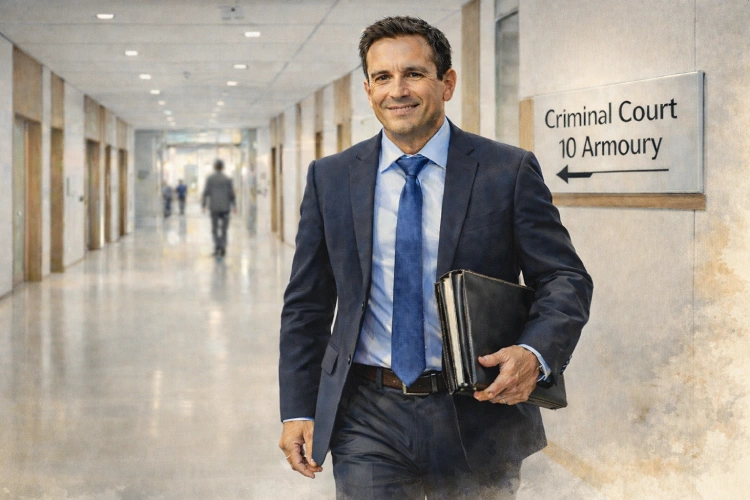
Before becoming a criminal defence lawyer, Nicholas Charitsis worked as a Crown Attorney. This experience provides valuable insight into how DUI charges are prosecuted, how evidence is evaluated, and how criminal cases are defended.
Unlike many sole practitioners, Charitsis Law offers the benefit of a team of seasoned Toronto criminal lawyers. When defending a DUI charge, it can be valuable to have more than one experienced lawyer reviewing legal issues, discussing defence strategies, and working to develop the strongest possible defence.
Meet Our Senior Toronto DUI Lawyers






Backed by hundreds of Google reviews, Charitsis Law has earned a reputation for strong criminal defence representation, client service, and winning DUI defence. Our lawyers regularly appear in the Toronto criminal courts, challenging evidence, cross-examining witnesses, while defending clients at trial.
Unlike many larger law firms, Nicholas Charitsis personally speaks with prospective clients. If you have been charged with impaired driving, call 416-731-7113 and discuss your case directly with an experienced Toronto DUI lawyer.
Why Experience Matters In DUI Defence
DUI charges are different from many other criminal offences. These cases often involve police investigations, breath testing records, witness evidence, disclosure issues, and technical legal requirements that must be carefully reviewed.
A successful DUI defence strategy requires more than simply reading the police report. The evidence must be analyzed, legal issues identified, and developed based on the specific facts of the case.
With more than 25 years of as Toronto criminal lawyers, the lawyers at Charitsis Law have defended hundreds of impaired driving, over 80, refusal charges throughout Toronto and the GTA. Our team regularly appears in all the GTA courts and has extensive experience challenging police investigations, cross-examining witnesses, and defending clients at trial.
The DUI Court Process In Toronto
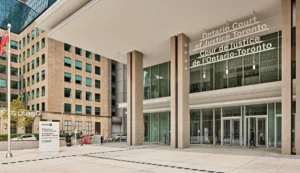
Most impaired driving charges in Toronto are heard at the Ontario Court of Justice at 10 Armoury Street. While every case is different, most impaired driving charges follow a similar court process.
First Court Appearance
Your first court appearance is not a trial. The purpose of this court date is to receive disclosure, advise the court whether you have spoken with a lawyer, and schedule the next steps in your case.
Disclosure Review
Disclosure is the evidence the Crown Attorney intends to rely upon in court to convict you. It often includes police notes, witness statements, breath testing records, and other documents relating to the investigation.
Many people leave court with disclosure but are unsure what it means or what they should do next. This is often the stage where people first learn whether there are legal defences available and how strong the Crown Attorney’s case really is.
If you have received disclosure from the Crown Attorney, call and speak with Nicholas Charitsis. The only way to understand the legal defences that may be available to you is to have the evidence carefully reviewed by an experienced DUI lawyer.
After reviewing the evidence and hearing your side of the story, Mr. Charitsis can explain the legal defences he sees, discuss the strengths and weaknesses of the case against you, and explain how he would approach defending your DUI charge.
Before making any decisions about your case, it is important to understand the evidence, the legal issues involved, and the options available to you.
Pre-Trial Discussions
After the disclosure has been reviewed and you decide to retain Charitsis Law, we will arrange a pre-trial discussion with the prosecutor. During that meeting, we will raise any legal issues we’ve have identified, challenge weaknesses in the evidence, and discuss any concerns looking to have the charge dropped.
These discussions may involve legal defences, Charter violations, witness credibility issues, disclosure concerns, or other problems that affect the crowns’s ability to prove the charge beyond a reasonable doubt.
In some pre-trials, charges can be withdrawn, reduced, or resolved without proceeding to trial. The approach taken will depend on the evidence, the legal issues involved, and the strengths of our team.
DUI Trials
When a DUI charge proceeds to trial, our Toronto DUI lawyers fight the charge by challenging the Crown Attorney’s evidence and advancing every available legal defence.
Police officers, breath technicians, and other witnesses must attend court to give evidence and are subject to cross-examination. Their evidence will be challenged, police notes and breath testing records will be carefully reviewed, legal arguments will be raised, and relevant case law will be relied upon in support of your defence.
The Crown Attorney must prove every element of the charge beyond a reasonable doubt before a judge can convict. If the evidence is unreliable, the investigation was flawed, legal rights were violated, or the Crown Attorney cannot prove the case, the judge must find the accused not guilty.
At Charitsis Law, we regularly rely on case law when defending DUI charges. Case law refers to previous decisions made by Ontario courts and appellate courts involving similar legal issues. These decisions help judges determine how the law should be applied in your case.
Where appropriate, our lawyers use criminal case law from the appellant courts to challenge evidence, support legal arguments, raise Charter issues, to demonstrate how similar cases have been decided by the courts. This can play an important role in defending a DUI charge and challenging the prosecution’s case.
When your future, driver’s licence, and criminal record are on the line, having the right DUI lawyer makes a difference.
Do You Have A Defence?
Many people charged with impaired driving assume they know how their case will end. The truth is that until an experienced DUI lawyer reviews the evidence, hears your side of the story, and examines the circumstances of the arrest, it is often impossible to know what legal defences may be available.
Before deciding how to proceed, it is important to understand:
- Whether the police followed the law
- Whether your legal rights were respected
- Whether the breath testing procedures were properly conducted
- Whether there are weaknesses in the evidence
- Whether the Crown Attorney can prove the charge beyond a reasonable doubt
Given the serious DUI penalties, including a criminal record, licence suspension, increased insurance costs, and travel restrictions, it makes sense to have your case reviewed before making any decisions.
Whether you were charged last night or have already received disclosure from the Crown Attorney, Nicholas Charitsis is happy to discuss your case. After hearing your side of the story and reviewing the available information, he can explain the legal defences he sees, assess the strength of the Crown Attorney’s case, and discuss how he would approach defending your DUI charge.
As Toronto DUI lawyers at Charitsis Law, we approach every DUI case by examining whether the evidence meets the high legal standard required for a conviction. That review is the starting point for every defence strategy.
Breathalyzer Evidence & DUI Defence
In many DUI cases, breathalyzer evidence is an important part of the Crown Attorney’s case. However, breathalyzer evidence must comply with strict legal requirements before a judge can rely upon it. Where there are problems with the testing procedures, records, or evidence, it can affect the Crown Attorney’s ability to prove the charge.
- Breathalyzer Technician’s Evidence: The breathalyzer technician may be required to attend court and give evidence. Their testimony and the procedures they followed can be challenged through cross-examination.
- Breath Testing Records: Testing records must be accurate, complete, and comply with the requirements of the Criminal Code. Errors can become important issues in the defence.
- Police Notes & Investigation: Police notes, observations, and investigative steps are often reviewed for weaknesses, inconsistencies, and legal issues.
- Legal Requirements: Breath demands, testing procedures, and the collection of evidence must comply with strict legal requirements. Mistakes can create legal defences.
Many people assume a breathalyzer reading automatically results in a conviction. This is not always the case. Issues involving timing, testing procedures, police observations, and the breathalyzer technician’s evidence can all affect the Crown Attorney’s ability to prove the charge.
In many DUI trials in Toronto, challenging the breathalyzer technician’s evidence and scrutinizing the testing procedures and records becomes a crucial part of our defence strategy.
Speak With A Toronto DUI Lawyer Today
If you have been charged with impaired driving, over 80, refusal, or another drinking and driving offence, speak with Nicholas Charitsis before making any decisions about your case.
Whether you were charged last night or have already attended court, Nicholas Charitsis can review the circumstances of your arrest, explain the legal defences available, assess the strength of the Crown Attorney’s case, and discuss how he would approach defending your charge.
A DUI conviction can affect your driver’s licence, criminal record, employment opportunities, insurance rates, and ability to travel. Before accepting those consequences, make sure you understand your options.
Call 416-731-7113 today and speak directly with DUI lawyer Nicholas Charitsis.
Make your decision after you know the facts.
FAQs from our Toronto DUI Lawyers
A. Every impaired driving case is different and the outcome depends on the facts, evidence, and circumstances surrounding the arrest. However, many impaired driving charges are more defensible than people first believe.
Our DUI lawyers regularly identify issues involving police procedures, Charter rights, breathalyzer testing, witness evidence, and disclosure. These issues can affect the Crown Attorney’s ability to prove the charge and may result in charges being withdrawn, reduced, or successfully defended at trial.
The best way to assess your chances of success call and speak to Mr. Charitsis. With years of experience at the Toronto courts, Nick will be able to answer all your questions about your case.
A. Yes. In many cases, DUI charges are withdrawn after legal issues are identified in the evidence or our investigation.
The Crown Attorney must prove the charge beyond a reasonable doubt using reliable evidence obtained legally and in accordance with the Criminal Code. Problems involving breathalyzer testing, police procedures, Charter violations, witness evidence, or documentation can all affect the strength of the case.
A careful review of the evidence and the disclosure is the first step, call and learn from a top DUI lawyer what defences fit in your case.
A. While you are not legally required to hire a lawyer, it is strongly recommended. Most people charged with a DUI have never been through the criminal court process and are not prepared to challenge police evidence, cross-examine witnesses, make legal arguments, or present their case before a judge.
Judges and Crown Attorneys will often encourage accused persons to obtain legal advice before making important decisions about their case. Pleading guilty without understanding the evidence or available defences can have long-term consequences.
Before deciding how to proceed, speak with an experienced Toronto DUI lawyer and understand your options.
A. No. There is never a charge to speak with Mr. Charitsis about fighting your DUI charge.
Whether you were charged last night or have already attended court, Nicholas Charitsis is happy to discuss your situation, answer your questions, and explain how our team of some of Toronto’s best dui lawyers can help you.
Many people are surprised to learn there are many legal issues that can affect the evidence or the police investigation. Before making any decisions, it makes sense to have your case reviewed.
A. Most drivers charged with impaired driving receive an immediate 90-day administrative driver’s licence suspension. If convicted, additional driving prohibitions, ignition interlock requirements, and licence reinstatement obligations may apply.
The consequences depend on the circumstances of the case and whether there are previous convictions. Because your ability to drive may be significantly affected, it is important to understand the strength of the Crown Attorney’s case and the legal defences that may be available.
A. Rare, Jail is not mandatory for a first DUI conviction in most standard cases. However, more serious circumstances can increase the risk of a custodial sentence.
Factors such as very high breathalyzer readings, accidents, injuries, prior criminal records, or other aggravating circumstances may affect sentencing. Every case is different and the outcome depends on the specific facts and evidence.
Before assuming the worst, speak with Nicholas Charitsis. A careful review of the evidence can help determine the strength of the Crown Attorney’s case, the available legal defences, and the realistic range of outcomes. the worst.