Criminal Lawyers Toronto | Toronto Criminal Law Firm Criminal Lawyers Toronto | Toronto Criminal Law Firm Criminal Lawyers Toronto | Toronto Criminal Law Firm Criminal Lawyers Toronto | Toronto Criminal Law Firm
  • Driving Charges
    • Impaired Driving
    • Drive Over 80mgs
    • Refuse Breath Tests Lawyer
    • Impaired Care & Control
    • Refusing Roadside Test
    • Driving Disqualified
    • Dangerous Driving Lawyers
    • Fail to Remain
    • Licence Suspensions
    • Stunt Driving
  • Practice Areas
    • Assault
    • Sexual Assault
    • Domestic Assault
    • Theft Under 5000
    • Impaired Driving
    • Drive Over 80mgs
    • Bail Hearings
    • Criminal Records
      • Fingerprints & Photographs
      • Criminal Licence Suspensions
      • Canadian Citizens
      • Records Removals
  • About
    • Legal Services
    • Lawyers
    • Recent Wins
    • Case Law
      • R. v. Andrews
      • R Vs Bernshaw
      • R vs Mok
      • R. v. Peterson
      • R vs Roberts
      • R. v. Stankewich
      • R. v. Stark
      • R. vs Stellato
      • R vs W.D.
    • In The News
    • Videos
    • Reviews
    • Blog
    • Locations
  • Locations
    • Aurora
    • Barrie
    • Brampton
    • Hamilton
    • Muskoka
    • Oshawa
    • Toronto West
    • Toronto East
    • Windsor
  • 647-930-0200
Criminal Lawyers Toronto | Toronto Criminal Law Firm Criminal Lawyers Toronto | Toronto Criminal Law Firm
  • Driving Charges
    • Impaired Driving
    • Drive Over 80mgs
    • Refuse Breath Tests Lawyer
    • Impaired Care & Control
    • Refusing Roadside Test
    • Driving Disqualified
    • Dangerous Driving Lawyers
    • Fail to Remain
    • Licence Suspensions
    • Stunt Driving
  • Practice Areas
    • Assault
    • Sexual Assault
    • Domestic Assault
    • Theft Under 5000
    • Impaired Driving
    • Drive Over 80mgs
    • Bail Hearings
    • Criminal Records
      • Fingerprints & Photographs
      • Criminal Licence Suspensions
      • Canadian Citizens
      • Records Removals
  • About
    • Legal Services
    • Lawyers
    • Recent Wins
    • Case Law
      • R. v. Andrews
      • R Vs Bernshaw
      • R vs Mok
      • R. v. Peterson
      • R vs Roberts
      • R. v. Stankewich
      • R. v. Stark
      • R. vs Stellato
      • R vs W.D.
    • In The News
    • Videos
    • Reviews
    • Blog
    • Locations
  • Locations
    • Aurora
    • Barrie
    • Brampton
    • Hamilton
    • Muskoka
    • Oshawa
    • Toronto West
    • Toronto East
    • Windsor
  • 647-930-0200

R. v. Lako

Criminal Lawyers Toronto | Toronto Criminal Law Firm / Criminal Case Law / R. v. Lako

R. v. Lako, 2022 ONCJ 435 (CanLII)

Challenging Legal Assumptions: Rebuttal of Presumptions in DUI Cases

What is Criminal Case Law

Court Gravel & Legal Books of Criminal Lawyer Nicholas CharitsisCanadian criminal law case law consists of court rulings and decisions from past judicial hearings and appeals.

These precedents guide courts and judges to interpret laws, especially when similar circumstances arise with a case before them.

If a current case closely resembles one with past withdrawn charges, the same legal reasoning should apply. This process ensures that similar cases receive consistent treatment.

Introduction: What Happened in R vs Roberts

In the case of R. v. Lako, Lako was charged with two offences: impaired operation of a conveyance and operation of a conveyance with a blood alcohol concentration exceeding the legal limit.

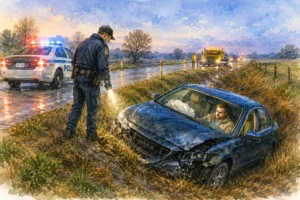
The incident occurred in the early hours of November 8, 2019, when police found Lako in his vehicle, which was stopped with the engine idling. Lako displayed signs of impairment, such as a moderate odor of alcohol, slurred speech, and difficulty standing. He was arrested for impaired operation.

The key issue in the trial was whether Lako was actually operating the conveyance. While the law presumes that an individual in the driver’s seat is operating the vehicle, Lako testified that he had no intention of driving. He explained that he had driven to a party, became intoxicated, and then used his car as a place to have a private conversation and subsequently fell asleep. He had plans for his girlfriend to pick him up, and if that failed, he intended to return to the party or stay at a friend’s house.

Judge Pratt found that Lako successfully rebutted the presumption of operation. It was determined that when he entered the vehicle, it was not with the intention to drive but to have a conversation and wait for a ride. Therefore, the court concluded there was no realistic risk he would drive while impaired. As a result, Lako was found not guilty of both charges, with the court emphasizing the lack of intent to operate the vehicle despite his apparent impairment. The case highlights the importance of the accused’s intent and circumstances in determining the operation of a vehicle under DUI laws.

The Background of the Case

In the case of R. v. Lako, the court’s decision primarily addressed the issue of whether the accused was “operating” his vehicle under the influence, as defined by DUI laws.

The court found that Lako, despite being in the driver’s seat with the vehicle’s engine idling, successfully rebutted the presumption of operation. His testimony indicated that he had no intention of driving the vehicle; he had used the car for a private conversation and then fell asleep, awaiting a ride from his girlfriend. Consequently, the court determined there was no realistic risk that Lako would drive while impaired. Judge Pratt concluded that the circumstances did not demonstrate a realistic risk of danger to persons or property, a crucial factor in determining control of a vehicle under the influence.

As a result of these findings, Lako was acquitted of both charges: impaired operation of a conveyance and operation of a conveyance with a blood alcohol concentration equal to or greater than the legal limit. The court’s decision emphasized the importance of assessing an individual’s intent and the specific context in which they are found in a vehicle when determining the operation under DUI laws.

This case highlights the nuanced legal interpretation required in DUI cases, particularly regarding the definition of “operating” a vehicle.

The Background of the Case

The legal issues in R. v. Lako, centered around the interpretation and application regarding DUI  laws, specifically relating to the definition of “operating” a conveyance under the influence. The primary legal issues addressed were:

  1. Definition of ‘Operating’ a Conveyance: The central question was whether Lako was “operating” the conveyance as per legal definitions when found by the police in his vehicle. This involved interpreting Section 320.11 of the Criminal Code, which defines “operate” as driving or having care or control of a vehicle.
  2. Application of Presumptions Under Section 320.35: The case examined the presumption under Section 320.35 that if a person is found in the driver’s seat, they are presumed to be operating the conveyance or motor vehicle. The court needed to determine whether Lako could rebut this presumption by proving he did not occupy the driver’s seat with the intention of setting the vehicle in motion.
  3. Assessment of Care or Control: If Lako successfully rebutted the presumption of operation, the burden shifted back to the Crown to prove he had actual care or control of the vehicle. The court needed to assess whether there was a realistic risk of Lako operating the vehicle given the circumstances, such as his level of impairment and his intentions regarding the vehicle.
  4. Charter Rights Violations: The defence argued that Lako’s Charter rights were violated during the investigation. However, given the court’s findings on the primary issue of operation, it did not need to address these potential violations in detail.
  5. Credibility and Intent of the Accused: The court’s decision heavily relied on assessing Lako’s credibility and his intent when he was found in the driver’s seat. His explanation of his actions and plans for the evening were crucial to determining whether he occupied the driver’s seat with the intention of setting the vehicle in motion.

In summary, the legal issues in R. v. Lako focused on the nuanced interpretation of what constitutes “operating” a conveyance under DUI laws, the application of legal presumptions related to being found in the driver’s seat, and the evaluation of the accused’s intent and actions in relation to the vehicle.

The Supreme Court’s Decision:

ONTARIO COURT OF JUSTICE

CITATION: R. v. Lako, 2022 ONCJ 435

[1] Lowhya Lako, hereinafter the Defendant, is charged with two offences: impaired operation of a conveyance and operation of a conveyance with a blood alcohol concentration equal to or greater than the legal limit. The defence argues that the Defendant’s Charter rights were violated in the conduct of this investigation and that I should exclude the evidence against him as a result. The Crown disputes the Charter violations and says the evidence obtained supports findings of guilt on both counts. These reasons explain why the Defendant will be found not guilty of both charges.

Admissions

[2] At the outset of trial, the issues of date, time, jurisdiction, identity, and the qualifications of the Intoxilyzer technician were admitted by the Defendant.

Issues

[3] There are multiple issues to be resolved in this case. They are:

1. Was the Defendant operating a conveyance when discovered by police?

2. Were any of the Defendant’s Charter rights violated in the ensuing investigation?

3. If the answer to Issue 2 is yes, what is the appropriate remedy?

Issue 1: Was the Defendant operating a conveyance when discovered by police?

[4] The Defendant was first seen by police at approximately 320am on the morning of 8 November 2019. Sgt. Andrew Drouillard saw a vehicle stopped on College Avenue east of that road’s intersection with Campbell Avenue. The driver’s door was open, the lights were on, and the vehicle was idling. Sgt. Drouillard drove up to the vehicle in his cruiser and honked his vehicle’s horn to get the driver’s attention. That didn’t work. He approached the vehicle on foot and saw that the driver was slouched over. He tried nudging him and calling out to him in an effort to rouse him. Eventually, the driver mumbled some slurred words and in so doing exhibited a moderate odour of alcohol on his breath. He confirmed the vehicle was his but did not respond when Sgt. Drouillard asked him to turn off the engine. Sgt. Drouillard ultimately went around to the passenger side, opened the door and turned off the engine himself. He instructed the driver to exit the vehicle. When the driver did so, he vomited 2-3 times on the ground and on himself. He said, “you don’t have to report this”. He had trouble standing and had to be assisted by Sgt. Drouillard. He was placed under arrest for impaired operation of a conveyance at 325am.

[5] The driver was identified as the Defendant. He was cooperative but confused. Sgt. Drouillard made an extra effort to ensure he understood both his right to counsel and the breath demand. A police transport vehicle arrived to take the Defendant to the police station while Sgt. Drouillard remained behind with the Defendant’s vehicle. He spoke by telephone to a qualified Intoxilyzer technician, PC Robert Briscoe, and relayed his grounds for the demand. After the Defendant’s vehicle was towed, he returned to the police station to complete his paperwork.

[6] Impairment was not argued by the Defendant. In my view, impairment is clear. The Defendant was difficult to rouse, had a moderate odour of alcohol on his breath, slurred speech, and could barely stand without assistance. He also vomited on being awakened. When he was asked to exit the vehicle, he told the officer that he should turn off then engine first, not knowing that had already been done. I find as a fact that he was impaired by alcohol.

[7] That does not, however, end the matter. As he was not driving when found by police, the Crown must prove that he had care or control of the vehicle. The prior drinking and driving sections of the Criminal Code differentiated between “operation” and “care or control”. The current law does not. Section 320.11 defines “operate” as follows:

(a) in respect of a motor vehicle, to drive it or to have care or control of it;

[8] Section 320.35 further states:

In proceedings in respect of an offence under section 320.14 or 320.15, if it is proved that the accused occupied the seat or position ordinarily occupied by a person who operates a conveyance, the accused is presumed to have been operating the conveyance unless they establish that they did not occupy that seat or position for the purpose of setting the conveyance in motion.

[9] It is undisputed that the Defendant was found in the driver’s seat of his vehicle. The Crown may therefore avail itself of the presumption in s. 320.35. It falls to the Defendant to establish that he did not occupy that seat for the purpose of setting the vehicle in motion. If he is able to do that, the onus shifts back to the Crown to prove he had actual care or control of the vehicle.

[10] The Defendant testified about how he came to be in the driver’s seat of his vehicle when Sgt. Drouillard found him. He said he had driven to a party at a residence on College Avenue that night. There, he drank until he was, in his words, drunk.

[11] At one point in the party his friend wanted to discuss relationship issues he was having. Not wanting to have that conversation in front of everyone, the Defendant suggested they go sit in his car and speak privately. They did. After the conversation, the Defendant fell asleep. When he woke up his friend was gone and Sgt. Drouillard was trying to rouse him.

[12] He testified to the plan he had in place that night. His primary plan was for his girlfriend to come to the party to pick him up. They would leave his car on College and pick it up in the morning. He had no intention of driving himself home that night. Had his girlfriend not shown up, he would have gone back inside his friend’s house to charge his phone and call her. Had she been unable to attend, he would have asked if he could stay over at his friend’s house and leave in the morning.

[13] He acknowledged turning the vehicle’s engine on but said it was only to keep warm.

[14] In cross-examination, the Defendant acknowledged that the party had largely wrapped up when he left but said he would still have gone back inside if he’d needed to.

[15] I find that the Defendant has rebutted the presumption found in s. 320.35. When he entered the car, it was not with the intention to set it in motion. It was a place for a private conversation with his friend, and a place to await the arrival of his girlfriend. He did not enter the vehicle with the intention of setting it in motion.

[16] The Crown must prove care or control beyond a reasonable doubt. In the case of R. v. Boudreault 2012 SCC 56 (CanLII), [2012] 3 S.C.R. 157 (hereinafter “Boudreault”) Justice Fish stated clearly what that means at paragraph 9:

For the reasons that follow, I have concluded that “care or control”, within the meaning [page163] of s. 253(1) of the Criminal Code, signifies (1) an intentional course of conduct associated with a motor vehicle; (2) by a person whose ability to drive is impaired, or whose blood alcohol level exceeds the legal limit; (3) in circumstances that create a realistic risk, as opposed to a remote possibility, of danger to persons or property.

[17] While Justice Fish was dealing with the prior legislation, his statement has been cited with approval in cases under the new law (see: R. v. Rodriguez-Garcia [2022] O.J. No. 1226 (S.C.J.); R. v. Panech [2022] O.J. No. 281 (C.J.))

[18] The first two parts of the definition have been satisfied by the Crown. I find that the Defendant did set about an intentional course of conduct in relation to his vehicle and that when he did so he was impaired by alcohol. It is the third part of the definition that attracts my attention. Was there a “realistic risk” of danger to persons or property on the basis of the Defendant’s actions?

[19] Given that I have found he did not initially enter the vehicle with the intention of putting it in motion, the question is whether there is a realistic risk he would have changed his mind and done so. Answering this question requires an analysis of all surrounding factors (see Boudreault, supra, paragraph 50). In R. v. Ross 2007 ONCJ 59 (CanLII), [2007] O.J. No. 619 (C.J.), my brother Justice Duncan offered this list of relevant circumstances at paragraph 14:

◼ Whether the accused had been driving after becoming impaired or did he only use the vehicle as a place to sleep or wait? Earlier impaired driving might show both his continuing care and control over the vehicle, his bad judgment regarding his fitness and his willingness to break the law.

◼ Whether the accused had reached his ultimate destination or did he still have to get somewhere, somehow, sometime?

◼ Whether the accused was slightly, moderately or highly impaired? This might relate to the likelihood of his exercising bad judgment, the time it would take to become fit and the likelihood that he would be presented with an opportunity to change his mind in that period.

◼ Whether the accused had in place a plan that would enable him to get home without driving?

[20] Justice Durno, sitting as a Summary Conviction Appeal Court in the case of R. v. Szymanski 2009 CanLII 45328 (ON SC), [2009] O.J. No. 3623 (S.C.J.) offered the following at paragraph 93:

While perhaps easily defined, what evidence will establish or refute that real risk is not as clear. However, as recommended in Toews, cases that have dealt with the issue provide valuable assistance in determining the criteria. The following non-exhaustive list illustrates areas that have been relied upon in determining if the real risk arises.

a) The level of impairment. R. v. Daines, [2005] O.J. No. 4046 (C.A.), R. v. Ferguson (2005), 2005 CanLII 1060 (ON SC), 15 M.V.R. (5th) 74 (S.C.J.), R. v. Ross (2007), 2007 ONCJ 59 (CanLII), 44 M.V.R. (5th) 275 (O.C.J.) In Ogrodnick, Wittman A.C.J. qualified his comments about speculation and conjecture by accepting that it was an appropriate basis to find care or control because the level of intoxication demonstrates unpredictability or a risky pattern of behaviour. Para. 54. In Ross, the trial judge found that this consideration might relate to the likelihood of the accused exercising bad judgment, the time it would take to become fit and the likelihood that he or she would be presented with an opportunity to change their mind during that time.

b) Whether the keys were in the ignition or readily available to be placed in the ignition. Pelletier, supra.

c) Whether the vehicle was running. R. v. Cadieux, [2004] O.J. No. 197 (C.A.)

d) The location of the vehicle, whether it was on the side of a major highway or in a parking lot. Cadieux, R. v. Grover, [2000] A.J. No. 1272 (Q.B.)

e) Whether the accused had reached his or her destination or if they were still required to travel to their destination. Ross, supra.

f) The accused’s disposition and attitude R. v. Smeda (2007), 51 M.V.R. (5th) 226 (Ont. C.A.)

g) Whether the accused drove the vehicle to the location of drinking. R. v. Pelletier, [2000] O.J. No. 848 (C.A.)

h) Whether the accused started driving after drinking and pulled over to “sleep it off” or started out using the vehicle for purposes other than driving. If the accused drove while impaired it might show both continuing care or control, bad judgment regarding fitness to drive and willingness to break the law. Ross, supra.

i) Whether the accused had a plan to get home that did not involve driving while he or she was impaired or not over the legal limit. Cadieux, Ross, R. v. Friesen, [1991] A.J. No. 811 (C.A.), R. v. Gill (2002), 33 M.V.R. (4th) 297 (S.C.J.) para. 21, Ross, supra.

j) Whether the accused had a stated intention to resume driving. In Cadieux, supra, where the accused testified he was not driving and was waiting to sober up. The Court of Appeal held that his evidence that he would not drive until he was sober only went to weight.

k) Whether the accused was seated in the driver’s seat regardless of the applicability of the presumption. R. v. Pelletier, [2000] O.J. No. 848 (C.A.)

l) Whether the accused was wearing his or her seatbelt. Pelletier, supra.

m) Whether the accused failed to take advantage of alternate means of leaving the scene. Pelletier, supra.

n) Whether the accused had a cell phone with which to make other arrangements and failed to do so. Cadieux, supra.

[21] I note the following from the Defendant’s evidence:

1. He did not start drinking until after he arrived at the party;

2. He had a plan that his girlfriend would pick him up and they would retrieve his car the next day;

3. When he entered his car after drinking, it was to have a private conversation with his friend;

4. He turned the engine on only to keep warm;

5. Had his girlfriend not shown up, he had a backup plan to go back into the residence where he’d been, charge his phone, and call her;

6. Had she turned out to be entirely unavailable, he would have asked the residents if he could stay the night.

[22] Further, there is no evidence that he ever moved the vehicle after he started drinking. There is likewise no evidence that he was wearing his seatbelt when found by Sgt. Drouillard. Given the plan he had in place, he had reached his destination when he arrived at the party; he was not looking to drive anywhere else that night.

[23] I have assessed the Defendant’s credibility. I find him to be a candid, polite witness. That he would have what is effectively a multi-pronged plan to deal with his intoxication that night suggests strongly that he was unlikely to abandon responsible thinking and drive himself home.

[24] Without question, there is the possibility that if he had awakened in the vehicle he might have chosen to drive. That, however, is not the test. Is there a realistic risk that he posed a danger to persons or property? Is there a realistic risk he would have driven?

[25] Based on all the evidence, I find there was no such realistic risk. The Defendant had a clear plan in place to be picked up that night. But for the need for privacy with his friend, there’s no indication he would have returned to his vehicle at all after drinking. Despite his obvious impairment, I find that the risk of him changing his mind and driving does not rise beyond the level of possibility. At the relevant time, the Defendant was not in care or control of his vehicle as defined in Boudreault, supra.

[26] The answer to Issue 1 is no.

Remaining Issues

[27] The remaining issues in this case deal with the Charter application and its effect on the evidence admitted at trial. Given my finding that the Defendant was not operating a conveyance when discovered by police, it is not necessary for me to address them. The charges before me are all predicated on the Defendant operating a conveyance. As he was not, the charges must be dismissed.

[28] I have considered that the wording of s. 320.14(b) allows for the possibility of a conviction when a person’s blood alcohol concentration is in excess of the legal limit “within two hours after ceasing to operate a conveyance”. The evidence is that he arrived at the party at approximately 7pm. He was discovered by Sgt. Drouillard at 320am. While simply getting into the driver’s seat might trigger a reasonable expectation that he may have to provide a sample of his breath, he was well outside the two-hour limit set by Parliament.

[29] The Defendant will be found not guilty of both charges.

Video

https://www.ontario-criminal-lawyers.com/wp-content/uploads/sites/3/2021/01/Toronto-Criminal-Lawyer-_-Impaired-Driving-Defences-_-Bolus-Drinking-Defence.mp4
Nicholas Charitsis Criminal Lawyer (

Nicholas Charitsis Criminal Lawyer

Impaired Driving | Better Business Bureau Endorses Charitsis Law

Criminal Lawyer reviews

Rachel Singh

2 days ago

★★★★★ Nick and his criminal lawyers worked on my impaired driving case. I was worried about getting a criminal record, but they took care of everything.They got my charge dropped to a traffic ticket, not a criminal offence. I’m so happy with the result. Before the trial date, I met with his team at least 8 times total to watch surveillance videos of me, solidify my defence, give me some Information about the law, and do a dry run of the trial with my friend who was going to testify with me. I felt as comfortable as I could given the situation since he prepared me well. Nick seems to has a good report with the court which I believe was to my advantage. He also prepared two back up technical defences. I recommend Charitsis Lawyers highly.

Olena Kuchuryan

7 days ago

★★★★★ My husband was charged with impaired driving and over 80. We felt totally hopeless. We saw a bunch of criminal lawyers for consultation, but only after meeting with Nicholas Charitsis and Vadim Paskaru we saw that they would do whatever it takes to win our case. It was difficult, but Nicholas and Vadim were with us every step of the way, supporting us, explaining next steps, always answering our questions. They always were easy to get in touch with and answer questions. As a result of their work, the impaired driving and over 80 charges were withdrawn. My husband ended up with careless driving ticket, no criminal record. We are very grateful to this amazing team of knowledgeable and skilled criminal lawyers. We would recommend them to anyone who is in trouble and does not know what to do.

Mohammad Niazi

1 week ago

★★★★★ Highly recommend the firm and truly appreciate their hard work, this firm are the best at what they do, they have withdrawn my both charges of Drive over 80 and Impaired Driving. They are a bit pricey but however that’s what it needs for professionals to resolve your matters and they had the courtesy to have me pay it over a period of time so definitely worth it regardless. I recommend them to anyone with any kind of criminal cases specially what I went through as results was awesome. highly recommend 100% no doubt. I’m super happy with their work and results.

Marisol Almarazo

2 weeks ago

★★★★★ I recommend Charitsis Law Criminal Lawyers they won my case! My criminal charges WITHDRAWN and my record will be erased immediately. I recommend them 100% for any legal problem that you need. The results that they provided were very impressive. Thank you

John Stocco

2 weeks ago

★★★★★ I was charged with Care and Control of a Motor Vehicle over 80mg. From the moment I contacted Vadim Paskarou at Charitsis Law, I was put as ease. Vadim was simply outstanding to watch when cross examining the officer who charged me. In the end, I was acquitted thanks to the expertise of Vadim Paskarou at Charitsis Law. If you have been charged with a criminal offence then I would highly recommend contacting Vadim!

Past results are not necessarily indicative of future results and litigation outcomes will vary according to the facts in individual cases.

More Google Reviews >


DUI Case Law

R. v. Andrews (1996): Alberta Court of Appeal overturns conviction, calls for re-assessment of ‘driving impairment’ evidence in DUI cases.”. More >>>


“R. v. Bernshaw: Exploring the grounds for breathalyzer demands and the debate over test reliability in DUI convictions. More >>>


R. v. Mok: Case focuses on privacy rights violation during DUI arrest, sparking debate on the appropriateness of charges. More >>>


R. v. Roberts: DUI Acquittal: Court dismisses Charter violation claims, focuses on BAC evidence insufficiency and legal counsel rights. More >>>


R. v. Stankewich: Highlighting the acquittal in an impaired driving case despite initial ‘fail’ in roadside breath test. More >>>


R. v. Stark: Not guilty in impaired driving case, emphasizing the critical evaluation of breathalyzer demand grounds. More >>>


R. v. Stellato: Doesn’t need to prove a marked departure from normal conduct to establish impairment. More >>>


R. v. S. (W.D.): Court defines jury instructions on credibility, stressing the importance of reasonable doubt in acquittal decisions. More >>>


Law-Society-of-Ontario-Logo

DUI FAQs

What is the best defence for a DUI?

The best defence for a DUI charge depends on the specifics of your case. Common strategies include:

Challenging the Breathalyzer: Disputing the accuracy of BAC readings due to improper testing or device calibration errors.

Proving Procedural Errors: Identifying mistakes made by police, such as violations of your Charter rights or improper roadside procedures.

Recent Drinking Defence: Arguing that your BAC was below the legal limit while driving and only rose after you stopped.
Every case is different, and the best defence depends on your specific circumstances. Speak to an experienced DUI lawyer today to explore your options.


What are the odds of winning a DUI case

The odds of winning a DUI case are usually in your favour. This is dependant on factors such as the evidence against you, police conduct, and the quality of your legal defence. Many DUI cases are successfully defended by:

Exposing procedural errors: Discrediting unreliable or inconsistent evidence.
Negotiating reduced charges:For some there maybe an opportunity for reduced charges like a traffic ticket for Careless Driving.

Your chances of success increase significantly with the guidance of a skilled impaired driving lawyer who knows how to challenge the evidence while speaking effectively for you in court.

Criminal Law Practice

  • Impaired Driving
  • Drive over 80
  • Refuse Breathalyzer Test
  • DUI Driving
  • Assault
  • Domestic Assault
  • Sexual Assault

Toronto West Office

Toronto Criminal Lawyers
1000 Finch Ave West, Suite 705
Toronto, ON M3J 2V5
647-930-0220

SiteMap | Privacy Policy | Contact
Charitsis Law © 2026

Toronto East Office

Toronto Criminal Lawyers
220 Duncan Mill Rd.
Toronto, ON M3B 3J5
647-930-0220

Toronto Criminal Lawyer Nicholas Charitsis
As experienced Ontario criminal defence lawyers, Charitsis Criminal Lawyers proudly serves and supports clients across these local communities: Aurora, | Brampton | Burlington | Hamilton | Muskoka | Newmarket | Oshawa | Windsor

This criminal lawyer site is for information only and is not meant to replace qualified legal advice by a criminal lawyer. The application and interpretation of Canadian law, including impaired driving, is constantly changing. The writers shall not be held responsible for any legal information that may be incorrect or out of date. The owners of this criminal defence website recommend that anyone wishing to fight a criminal charge obtain advice from a qualified criminal lawyer before doing so.