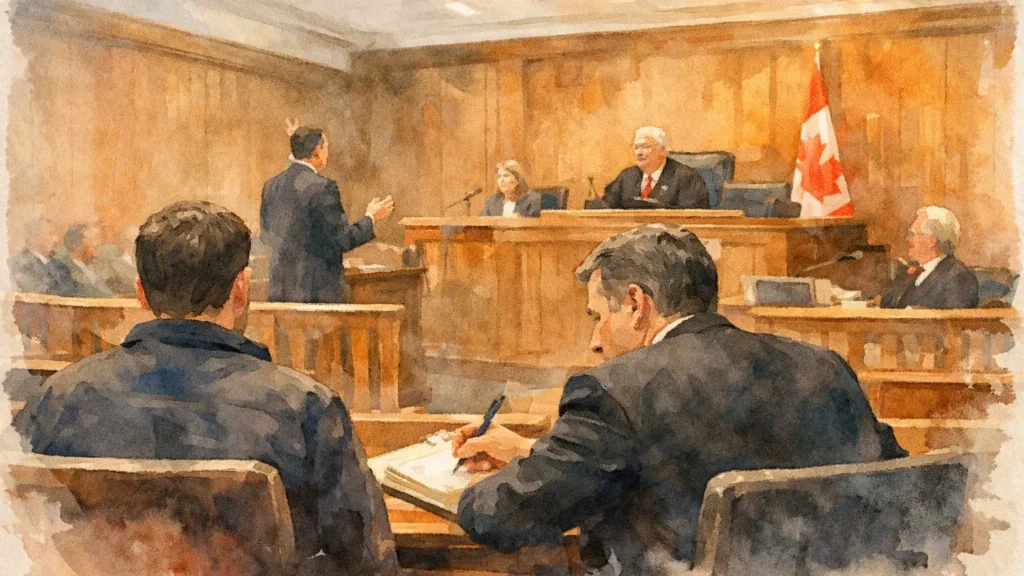
Can You Fight a Criminal Assault Charge?
If you’re looking for a criminal assault lawyer, Charitsis Law provides experienced legal representation for people charged with assault and other criminal offences.
Former Crown Attorney Nicholas Charitsis has more than 25 years of experience defending assault charges in Toronto and throughout the GTA.
Being charged with assault does not mean you will be convicted. Many assault cases involve self-defence, conflicting witness accounts, credibility issues, or weaknesses in the Crown’s evidence. We carefully review the evidence, explain your legal options, and build a defence strategy tailored to the facts of your case.
If you have been charged with assault, speak directly with criminal assault lawyer Nicholas Charitsis to discuss your case aat 416-731-7113.
What Is the Definition of a Criminal Assault
A criminal assault is defined under section 265 of the Criminal Code of Canada. The legal definition is broader than most people expect and includes both physical contact and certain types of threats.
Under section 265(1), a person commits assault in the following situations:
• Applying force without consent: Assault occurs when someone intentionally applies force to another person without their consent. The force can be direct or indirect and does not need to cause injury.
• Attempting or threatening force: An assault can occur even if no contact happens. The accused must have, or cause the other person to reasonably believe they have, the present ability to carry out the threat.
• Accosting while armed: A person can commit assault by accosting or impeding another while openly carrying a weapon or imitation weapon. Physical contact is not required in this scenario.
Consent is also specifically addressed in section 265(3). Consent is not legally valid if it is obtained through force, threats, fraud, or abuse of authority.
The Crown must prove the absence of consent beyond a reasonable doubt. In many assault cases, the issue is not whether contact occurred, but whether it was intentional and without lawful consent.
Relevant Criminal Code provision:
Assault — Criminal Code of Canada (s. 265)
[View the full section on the Justice Laws Website (Government of Canada)]
Penalties for Criminal Assaults
Assault charges in Ontario are criminal offences under the Criminal Code of Canada.
The penalties depend on the type of assault and the circumstances, but even a common assault conviction can have lasting consequences. The penalties for assault can include:
• Criminal record: A conviction for assault results in a criminal record that remains with you for life. This can affect employment opportunities, professional licensing, immigration status, and travel to the United States.
• Probation: The court may impose probation with strict conditions. These can include no-contact orders, counselling requirements, and reporting obligations.
• Fines: Fines may be imposed depending on the circumstances of the case. Financial penalties are often combined with other court orders.
• Jail time: Assault is punishable by imprisonment, even for first-time offenders in certain situations. The risk of jail increases where there are prior convictions or aggravating factors.
• Weapons prohibitions: A conviction may result in restrictions on possessing firearms or other weapons. These prohibitions can last for many years or even permanently.
• Immigration and travel consequences: Non-citizens may face serious immigration complications. Travel to the United States can become difficult or impossible without special waivers.
These consequences are serious and can extend well beyond the courtroom. Before accepting a criminal conviction for assault, it is important to understand your options and whether the evidence truly supports the charge.
Types of Assault Charges in Ontario
Assault charges in Ontario are divided into different levels depending on the severity of the alleged conduct and injury. The classification of the charge directly affects potential penalties and defence strategy.
Common Assault (Section 266)
Common assault is the most basic assault offence under the Criminal Code. It does not require proof of physical injury.
• Minimal force required: Even minor, intentional contact without consent can qualify as assault. No visible injury is necessary.
• Hybrid offence: The Crown may proceed summarily or by indictment. The election affects sentencing exposure.
• Lower penalty range: Jail is possible, but outcomes depend heavily on the surrounding facts and prior record.
Domestic Assault
A domestic assault charge involves an allegation of assault against a spouse, common-law partner, former partner, dating partner, or another person in a domestic relationship. The legal definition of assault is the same as any other assault charge, but domestic assault cases are often prosecuted differently.
• Relationship matters: The allegation involves someone with whom the accused has a domestic relationship. This often results in stricter bail conditions, including no-contact orders.
• Serious consequences: A domestic assault charge can affect your ability to return home, see your family, or communicate with the complainant while your case is before the court.
• Strong defence is essential: The Crown must still prove the charge beyond a reasonable doubt. We carefully examine the evidence, witness statements, and the circumstances surrounding the allegation to identify available defences.
Assault Causing Bodily Harm (Section 267)
Assault Causing Bodily Harm requires proof of injury beyond trivial or momentary harm. The injury must interfere with health or comfort in a meaningful way.
• Bodily harm threshold: The harm must be more than minor or fleeting. Medical evidence often becomes important.
• Higher sentencing risk: Penalties increase significantly compared to common assault. Jail becomes more likely depending on the circumstances.
• Intent remains required: The Crown must still prove intentional application of force. Accidental conduct does not meet the legal standard.
Aggravated Assault (Section 268)
Aggravated assault is the most serious form of assault in Canada. It involves severe or life-threatening injury.
• Serious injury requirement: The assault must wound, maim, disfigure, or endanger life. The harm must be substantial.
• Indictable only offence: Aggravated assault proceeds by indictment. The maximum penalty is 14 years imprisonment.
• Elevated proof burden: The Crown must prove both the assault and the level of injury. Medical and expert evidence are often central.
Assault with a Weapon (Section 267)
An assault with a weapon charge alleges that a person used, carried, or threatened to use a weapon while committing an assault. A weapon can include almost any object if it is used or intended to be used to cause injury or threaten another person.
• A weapon is not limited to firearms: Everyday objects such as bottles, sticks, knives, tools, or even a vehicle may be considered a weapon depending on how they were used.
• More serious penalties: Assault with a weapon is treated more seriously than common assault and can result in significant penalties, including imprisonment, depending on the circumstances.
• The Crown must prove the charge: The prosecution must prove beyond a reasonable doubt that an assault occurred and that a weapon was used or threatened during the incident. A careful review of the evidence may reveal weaknesses in the Crown’s case.
Understanding which type of assault charge you are facing is critical. An experienced assault lawyer in Ontario can assess the evidence, explain the classification, and develop a defence strategy tailored to the specific level of charge.
Call 416-731-7113 to speak directly with a criminal defence lawyer and request a confidential case review today.
What the Crown Must Prove in an Assault Case
In every assault prosecution, the burden is entirely on the Crown. The accused is presumed innocent, and the Crown must prove each legal element of assault beyond a reasonable doubt.
To secure a conviction, the Crown must establish the following:
• Intentional application of force: The contact must have been intentional, not accidental. Even minor force can qualify if it was applied deliberately.
• Lack of consent: The complainant must not have consented to the force. Consent obtained through threats, fear, fraud, or abuse of authority is not legally valid.
• Present ability in threat cases: If the allegation involves a threat, the accused must have had, or caused the complainant to reasonably believe they had, the present ability to carry it out. Mere words without circumstances supporting the threat are often not enough.
• Identity of the accused: The Crown must prove the person charged is the person who committed the alleged act. Identification evidence must be clear and reliable.
• Proof beyond a reasonable doubt: Every essential element must be proven to a high criminal standard. If there is a reasonable doubt on any one element, the court must acquit.
In many assault cases, the central issues involve intent, consent, or credibility, and even small weaknesses in the evidence can have a significant impact on the outcome.
Common Defence Issues in Assault Cases
Assault charges often appear straightforward, but they frequently turn on credibility, context, and precise legal definitions. A careful review of the disclosure can reveal weaknesses that are not obvious at first glance.
• Credibility issues: Many assault cases depend on conflicting versions of events. Inconsistencies, delayed reporting, or contradictions in witness statements can raise reasonable doubt.
• Consent disputes: The issue may not be whether contact occurred, but whether it was consensual. The Crown must prove the absence of consent beyond a reasonable doubt.
• Self-defence: A person is legally permitted to use reasonable force to defend themselves. If the force used was proportionate and necessary, this may provide a complete defence.
• Lack of intent: Assault requires intentional conduct. If the contact was accidental or reflexive, the legal element of intent may not be satisfied.
• Charter violations: If police violated constitutional rights during arrest or investigation, evidence may be excluded. Excluded evidence can significantly weaken the prosecution’s case.
• Insufficient evidence: The Crown must prove every element of the offence to a high criminal standard. Weak identification or unreliable testimony can result in an acquittal.
Every assault case turns on its specific facts, and identifying strategic defence issues early can meaningfully affect how the matter is resolved.
Pre-Trial Strategy in Assault Cases
The pre-trial stage is where an experienced lawyer can have the greatest impact on the direction of a case. Before any assault trial begins, the evidence is reviewed, legal issues are identified, and strategic decisions are made that can significantly affect the outcome.
• Full disclosure review: Your assault defence lawyer carefully analyzes police notes, witness statements, and video evidence. Small inconsistencies or gaps in proof can become central defence issues.
• Early credibility assessment: Many assault charges depend heavily on competing versions of events. Identifying weaknesses in the complainant’s account early can shape negotiations and trial strategy.
• Charter analysis: Police conduct during arrest, questioning, or detention must comply with constitutional standards. Rights violations can lead to exclusion of evidence.
• Resolution discussions: Pre-trial meetings allow your criminal lawyer for assault charges to challenge evidentiary weaknesses directly. Strong strategic positioning at this stage can influence how the Crown proceeds.
• Trial preparation: If the matter proceeds to trial, preparation begins well in advance. Witness strategy, cross-examination planning, and evidentiary objections are developed methodically.
The pre-trial phase is not procedural formality — it is where legal strategy is built, pressure points are identified, and the foundation for the best possible outcome is established.
Speak With a Lawyer About Assault Charges
If you are facing assault charges, early legal strategy matters. Speaking with an experienced assault lawyer in Ontario as soon as possible can significantly affect how your case develops.
Evidence must be reviewed carefully and strategically. Witness statements, police notes, and disclosure details often contain issues that are not obvious at first glance.
When you call 416-731-7113, you can speak directly with one of our criminal defence lawyers. Your confidential case review allows us to assess the evidence and explain your options clearly and honestly.
Our team of assault charges lawyer can:
• Review your disclosure early: Early analysis allows weaknesses in the Crown’s case to be identified before positions harden. Timing can influence resolution opportunities.
• Assess consent and intent issues: Assault cases often turn on subtle factual disputes. Clarifying these issues early can change the direction of the case.
• Develop a strategic defence plan: Whether the matter resolves or proceeds to trial, strategy must be deliberate and informed. Every decision should be made with long-term consequences in mind.
• Protect your criminal record: Avoiding a conviction is often the central objective. Strategic defence work begins well before trial.
Do not wait until your next court appearance. Call 416-731-7113 to speak directly with an experienced assault defence lawyer and schedule your confidential case review today.
FAQs About Assault Charges in Ontario
Can assault charges be dropped in Ontario?
A. Yes. Assault charges can be withdrawn if the evidence is weak or credibility issues arise. An experienced assault lawyer can identify weaknesses early and raise them with the Crown during pre-trial discussions.
Do I need injuries for it to be assault?
A. No. Assault does not require visible injuries. Even minor, intentional contact without consent can qualify under the Criminal Code.
Can I be charged with assault if the other person started it?
A. Yes, you can still be charged. However, self-defence may apply if the force used was reasonable and necessary in the circumstances.
What if the complainant wants to drop the charges?
A. The complainant cannot simply cancel the case. The decision to proceed belongs to the Crown, although a change in the complainant’s position can affect how the case moves forward.
Is assault always a criminal record?
A. A conviction results in a criminal record. However, depending on the facts, outcomes such as a withdrawal, peace bond, or discharge may avoid a permanent conviction.
Will I go to jail for assault?
A. Jail is possible, especially if the Crown proceeds by indictment or there are prior convictions. Many cases resolve without jail, depending on the strength of the evidence and surrounding circumstances.
How soon should I speak to an assault lawyer?
A. As soon as possible. Early involvement allows your criminal defence lawyer for assault charges to review disclosure, identify defence issues, and begin shaping the strategy before key court dates.
If you have been charged, call 416-731-7113 to speak directly with Nicholas Charitsis.
] } ] }