
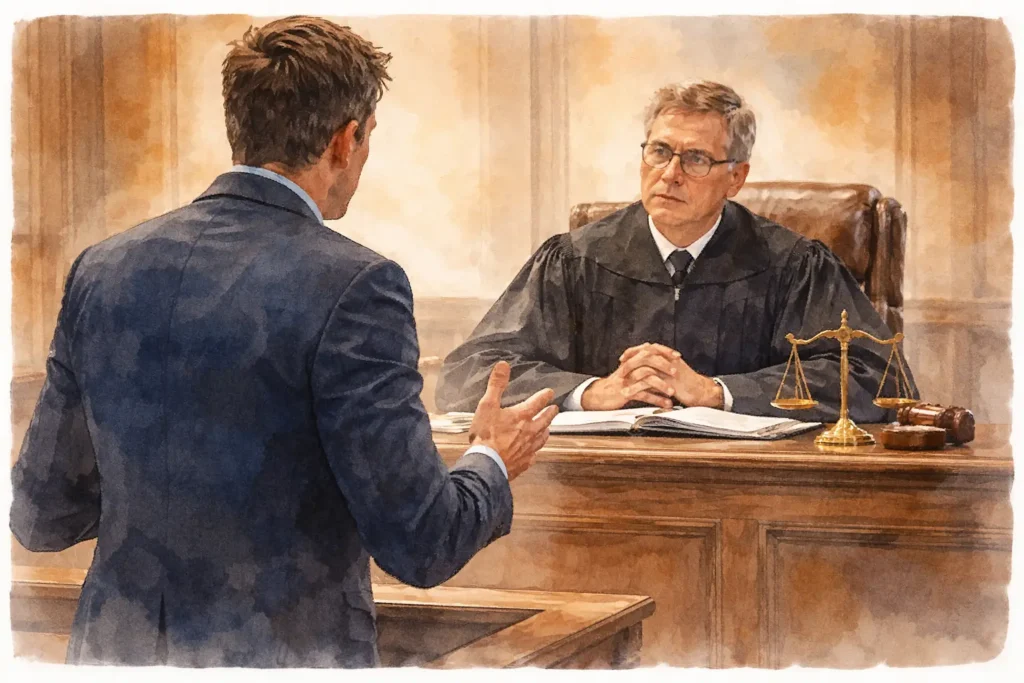
Improper Breath Demand in DUI Cases
Many people charged with impaired driving wrongly think they have no defence and are ready to plead guilty.
In this case, that is exactly what the client thought. However, a careful review by our team of DUI lawyers identified a critical issue with the breath demand, which ultimately led to a finding of not guilty.
At Charitsis Law, our DUI lawyers review each case carefully, examining the details that are often overlooked and identifying issues that can change the outcome. This focused approach has led to consistent results and successful outcomes for our clients.
Where you need to speak to a criminal lawyer, call Charitsis Law at 647-930-0200.
Synopsis of Events
The York Regional Police were dispatched to McDonalds located in the Town of Richmond Hill for an impaired driving complaint.
Upon arrival at the above location, York Regional Police located the vehicle outside the drive-thru window, as described by civilian witness. Police approached the vehicle and PC LITTLE asked the lone male driver to put his window down, however the male opened the drivers side door and proceeded to exit the motor vehicle. Male identified with a valid Ontario driver’s licence with photo ID that bared true likeness to the driver as AC.
As AC exited the vehicle, he moved very slowly, and when standing still wavered back and forth. The smell of alcohol could be detected coming from AC’s mouth, and was very slow in responding to officers when questioned.
At 0419 hours, PC RIAHI read AC a breathalyzer demand in order to perform a roadside breath test. PC LITTLE and PC PETTENUZZO both stood by as AC repeatedly asked officers “what is good for me to do”, asking officers multiple times to explain what the outcome would be if he did the breath test or not; however when asked multiple times over a ten minute span to complete the breathalyzer test, Andrew refused to give an answer.
Additionally, over the ten minutes, instructions and outcomes of completing or refusing the road side test were explained more than half a dozen times, in different manners in order to have AC understand the breathalyzer demand by all officers.
Due to the uncooperative behaviour and refusal; AC was arrested at 0429 hours and a contract tow request was placed.
AC was put in the rear drivers side of PC RIAHTI’s cruiser where he was cautioned and read his rights to counsel. AC was later released at 0450 hours on a form 9 with a first appearance and fingerprint date in the Town of Newmarket. AC was also informed that his licence will be suspended for 90 days and vehicle impounded for 7 days.
Evidence at Trial – Was the Breath Demand Lawful?
A key issue at trial was whether police made a lawful breath demand, which is required to prove a refusal charge. The court looked closely at how the demand was explained, what was said to the driver, and whether the correct legal process was followed.
How the Demand Was Communicated
During the interaction, officers spoke with the driver over several minutes and repeated the demand more than once. The way the demand is explained matters because it affects whether the driver understands their legal obligation.
- the driver was told he could provide a breath sample or decline
- he was told that refusal could lead to a criminal charge
- officers explained the process several times using different wording
- the driver continued asking what he should do
These repeated explanations showed that police were trying to obtain compliance, but they also raised questions about clarity and consistency in how the demand was presented.
The Critical Error – Wrong Demand Read
The most important issue in this case arose when the officer read a formal demand from his memo book. While this may seem like a small mistake, the exact wording of a demand is legally significant.
- the officer first made informal roadside requests
- after some time, he read a formal demand from his notes
- the demand read was for an approved instrument used at the station
- the correct demand should have been for a roadside screening device
- the two demands have different legal meanings and consequences
This error became central to the case because the law requires the correct type of demand to be made at the correct time.
Why the Type of Demand Matters
The law draws a clear distinction between different types of breath demands. Even if they sound similar, they are not interchangeable and must be used properly.
- the approved instrument demand applies when a person is taken to the station
- the roadside screening demand applies at the scene of the stop
- each demand carries different legal obligations and procedures
- using the wrong demand can affect whether a refusal is legally valid
These differences exist regardless of whether the driver fully understands them. What matters is whether the demand itself meets the legal standard.
Positions Taken in Court
Both the defence and the Crown made arguments about whether the demand was still legally valid despite the mistake. The court had to consider the full context of what happened.
- the defence argued that the wrong demand made the request unlawful
- the defence submitted that without a lawful demand, the charge cannot be proven
- the Crown argued that the earlier informal demand was enough
- the Crown submitted that the situation should be viewed as a whole
These competing arguments required the judge to decide whether the legal requirement for a proper demand had been satisfied.
The Court’s Finding on the Demand
After reviewing all of the evidence, the judge agreed with the defence that the demand was not lawful. The timing and wording of the demand played a key role in that decision.
- the wrong demand was read to the driver
- the refusal occurred after that incorrect demand was made
- the situation created confusion about the driver’s legal obligation
- the earlier informal demand was not enough to fix the error
As a result, the court found that a lawful demand had not been made. Because a lawful demand is required to prove a refusal charge, the case could not succeed.
Judge’s Decision – Charge Dismissed
After hearing all of the evidence, the court focused on one key issue: whether a lawful breath demand had been made. This was essential because a refusal charge cannot succeed unless the Crown proves that the demand was legally correct.
What the Court Focused On
The judge looked at the full sequence of events and how the demand was handled from start to finish. The timing of the formal demand and the type of demand used were especially important.
- the officer made several informal requests before reading a formal demand
- the formal demand that was read was the wrong type
- the refusal occurred after the incorrect demand was given
- the situation created confusion about the driver’s legal obligation
These factors led the court to question whether the legal requirement had been met.
Why the Demand Was Not Lawful
The court made it clear that the type of demand used is not a minor detail. It is a core part of the offence that must be proven.
- a person is only required to comply with a lawful demand
- the demand must match the situation in which it is given
- the approved instrument demand applies at the station, not roadside
- using the wrong demand means the legal requirement is not satisfied
Even though the mistake was not intentional, it still had legal consequences.
The Court’s Final Conclusion
The judge rejected the Crown’s argument that the earlier informal demand was enough. The court found that the incorrect formal demand changed the legal situation.
- the incorrect demand was a significant error
- the demand must be assessed based on the full context
- the legal differences between the two demands are important
- the driver’s obligation depends on a lawful demand being made
Because the wrong demand was used, the court found that the legal foundation of the charge was missing.
The judge concluded that the Crown had not proven an essential element of the offence. As a result, the refusal charge could not stand and was dismissed.
What This Means for Your Case
Many people assume that a refusal charge is automatic if a breath sample is not provided. However, this case shows that the outcome depends on whether police followed the correct legal steps from the beginning.
Why the Details Matter
Every impaired driving case is built on a series of steps taken by police. If one of those steps is done incorrectly, it can affect the entire case.
- the timing of the demand must be correct
- the wording of the demand must match the situation
- the driver must be given a clear and lawful direction
- the legal requirements must be followed at each stage
These details may seem small, but they can have a major impact on the result.
What Can Be Challenged
If the breath demand is not handled properly, several important issues may arise. These issues can form the basis of a strong defence.
- whether the correct type of demand was made at the roadside
- whether the demand was clearly explained to the driver
- whether the timing of the demand affected the response
- whether confusion played a role in what happened
- whether the legal requirements for a refusal charge were met
Careful review of these issues can change how the case is approached and how it is resolved.
Why Early Review Is Important
The strength of a case is not always obvious at the beginning. What matters is how the evidence is reviewed and understood.
- the police notes must be examined closely
- the sequence of events must be clearly understood
- the legal requirements must be applied to the facts
- the defence strategy must be built early
This is why speaking with a criminal defence lawyer as soon as possible can make a meaningful difference in your case.
Speak with a DUI Lawyer
If you are facing a refuse breath test or impaired driving charge, it is important to understand that the outcome depends on more than just what happened at the roadside. The law requires police to follow specific steps, and even small errors can affect the case.
At Charitsis Law, our DUI lawyers review every detail, including how the breath demand was made, what was said to you, and whether the correct legal process was followed. This careful review often identifies issues that are not obvious at first.
Speaking with a lawyer early allows you to understand your situation clearly and avoid making decisions that could affect your case later on. Many people are surprised to learn that problems with the investigation or the demand itself can change the direction of the case.
Call 647-930-0200 to speak with a DUI lawyer. Your consultation is free and confidential, and you will receive clear guidance on your next steps.