
Refuse Breath Test – Medical Defence
The accused gave a reasonable defence for not blowing properly into the breathalyzer, a medical reason that he did not disclose at the time of arrest.
Facts of the Case
The accused was stopped by police who were in the vicinity of a Night Club.
The police were investigating “possible impaired drivers” in the area. The accused was stopped by a officer of the Ontario Provincial Police.
The Police officer testified that while traveling directly behind the accused, he observed the accused motor vehicle drifting from left to right in its lane with it’s left and right tires touching the broken lines dividing lanes one and two, and lanes two and three.
The officer activated the emergency lights of the police car and the accused vehicle began breaking with its left indicator activated, pulling towards the right shoulder.
The police officer approached the vehicle and once beside the car he stuck his head into the drivers compartment and could smell a strong odour of an alcoholic beverage and freshly burnt marijuana emanating from the interior of the vehicle.
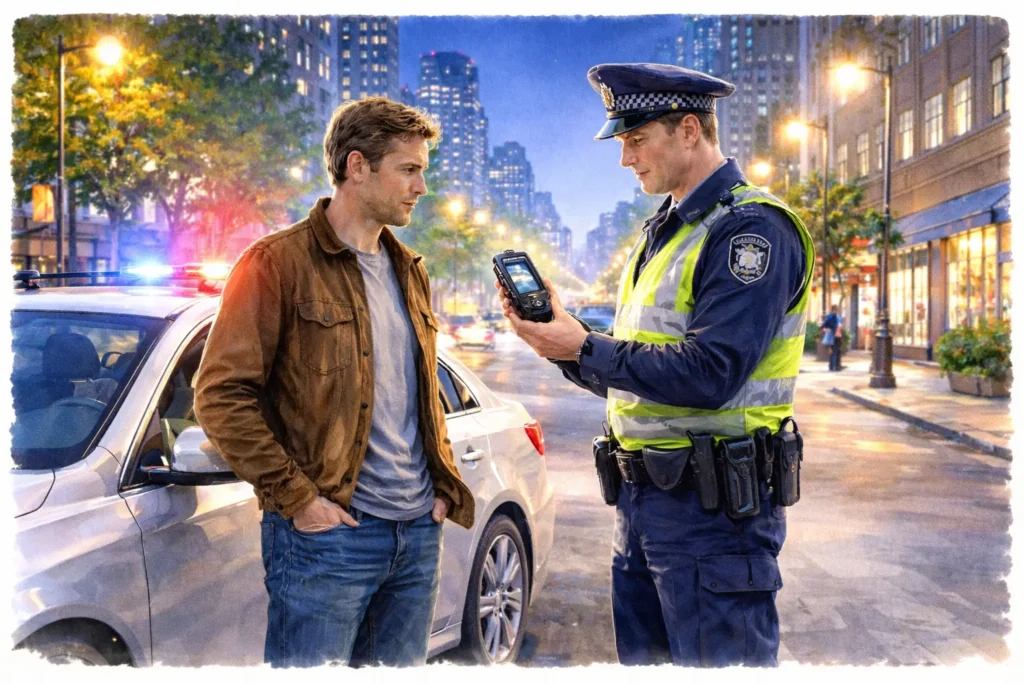
The accused stated that he did not consume any alcoholic beverages that night but that his passenger did. The officer had suspicion that the driver of the motor vehicle had consumed alcohol and made a breath demand for a test in the Approved Screening Device, an instrument for breathalyzer testing.
The officer provided the accused twelve opportunities to blow in to the breath machine and to proved a breath sample, and each time they were unsuccessful. The police officer consequently arrested the accused for failure to provide a suitable sample in the approved screening device contrary to section 254 (5) of the Criminal Code of Canada.
At trial, Toronto DUI Lawyer Nicholas Charitsis cross-examined the police officer about the incident.
There were no other officers on the scene and the police car was not equipped with a video recording device to capture the incident on camera. The police officer relied on his notes that were made over nine (9) months before the trial date.
The police officer admitted in cross examination by that Mr. S. “may have been coughing throughout the incident”. After cross examining the police officer, Charitsis called the accused to testify.
The accused explained to the court that he suffers from chronic allergies during rag weed season and was suffering from these allergies the day he was pulled over the police officer.
The accused went on to explain that his allergies made it difficult to blow for more than two or three seconds in the approved screening device and therefore he could not get a reading on the machine.
The accused testified that he did not say anything to the officer about his allergies the night of the arrest because “the police officer never asked and didn’t think it was necessary to go through my whole medical history.”
Ruling by the Judge
Justice Gadge carefully reviewed all of the evidence presented at trial, including the officer’s testimony and the explanation given by the accused.
The court found that there was no clear or intentional refusal to provide a breath sample. Instead, the evidence showed that the accused made repeated attempts to comply with the demand, but was unable to do so. The accused’s explanation, supported by the circumstances observed during the interaction, raised a reasonable doubt about whether this was truly a refusal.
As a result, the court accepted that a valid and reasonable excuse had been established. The Crown Attorney was unable to prove beyond a reasonable doubt that the accused deliberately failed to provide a sample as required under the Criminal Code. Because of this, the charge could not be sustained, and the case was dismissed.
Case Dismissed – Summary
The client was charged after police believed he failed to provide a proper breath sample during a roadside investigation.
However, the evidence showed he made repeated attempts to comply. At trial, our DUI lawyers focused on whether this was a true refusal or a physical inability. Cross-examination revealed gaps in the officer’s evidence, including no video, no other witnesses, and reliance on notes made months later.
The judge accepted that the client had a reasonable medical explanation that affected his ability to blow into the device. There was no clear, intentional refusal, and the Crown Attorney could not prove the charge beyond a reasonable doubt.
As a result, the court dismissed the case, showing how a strong DUI defence strategy and careful review of the evidence can lead to a winning outcome.
Experienced Criminal Defence
Charitsis Law, Impaired Driving Defence Team
Experience counts in criminal defence. Knowing the court system, the Crown Attorney’s, police, and judges can have a serious impact on how your case proceeds. The reputation and experience of your criminal defence lawyer matters and can influence how your case is handled from the start.
The courts recognize criminal lawyers who prepare thoroughly, challenge the evidence, and present strong and effective defence arguments. At Charitsis Law, our team of DUI lawyers and criminal defence professionals focuses on reviewing the evidence, guiding you through the court process, and building a clear defence strategy tailored to your case.
Call 647-930-0200 to speak with a criminal defence lawyer at Charitsis Law, and lets just have a conversation about what happened and how we can help you.
Our legal team has years of experience helping individuals facing criminal charges across Ontario. We work together to identify weaknesses in the Crown’s case and take the steps needed to have charges withdrawn or dismissed whenever possible.