
DUI Lawyers | Impaired Driving

A DUI charge in Ontario is a serious criminal offence that can result in a criminal record and driver’s licence suspension. Learn how impaired driving cases work and how a lawyer can help protect your record and driving privileges.
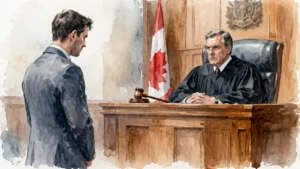
Ontario DUI Lawyer in a Court Room

DUI & Impaired Driving Lawyers

The phrase Ontario DUI lawyers is often searched by drivers who have been charged with impaired driving and need clear answers fast. If you are facing a DUI charge in Ontario, you are dealing with a serious criminal offence that can affect your licence, your record, and your future.

As Ontario DUI lawyers, we review the evidence, identify legal issues, and build defence strategies that can lead to charges being withdrawn or dismissed. Our goal is to help you avoid a criminal record and the consequences that come with a conviction.

At Charitsis Law, our criminal defence lawyers bring over 25 years of experience defending DUI charges across Ontario courts, backed by strong client reviews and proven results.

Call 647-930-0200 to speak with an Ontario DUI lawyer for a free, confidential consultation.

Relevant Criminal Code provision:
Impaired Operation of a Conveyance — Criminal Code of Canada, s. 320.14(1)
[View the full section on the Justice Laws website]

DUI Penalties in Ontario

Impaired driving charges are taken seriously in Canada. A conviction for any drinking and driving charge results in a criminal record and licence prohibition.

Convicted drivers cannot drive anything driven by an engine, anywhere in Canada, including construction equipment, tractors, even a riding lawn mower is prohibited.

  • Criminal record: if you’re convicted of a criminal offence in Canada you receive a criminal record that stays with you for life.
  • Licence Suspensions: Drivers convicted of criminal driving offences receive a driving prohibition for at least one year for first offences.
  • Employment: Commercial drivers are unemployable with a criminal driving conviction, professionals must report criminal charges.
  • Ignition interlock devices: – when your licence is reinstate you will be required to pay for the installation and monitoring of a ignition interlock device in any vehicle you wish to drive.
  • Insurance implications: – persons convicted of driving and driving offences will be placed in high risk insurance rates for 5 or more years.
  • Travel: Persons convicted of criminal driving offences maybe prohibited from entering the United States or other countries.
  • Jail: Where there are repeat offences or a serious situation or death the accused can be sent to jail as determined by the court.
  • Fines: A minimum $1,000 fine for a first offence
  • Mandatory Alcohol Testing: Before any reinstatement the driver will have to provide medical proof of their sobriety before any licence can be issued.

Before making that decision, it is worth understanding exactly what those penalties look like and how they can affect your life — learn more about DUI penalties in Ontario.

Being Charged Does Not Mean You Are Guilty

A DUI charge is based on what a police officer “believed at the time of the incident”, the officer’s opinion of your driving and sobriety.

In practical terms, the officer is saying, that in “their opinion”, your ability to drive was affected or changed by the consumption of an alcohol or a drug.

That opinion is what leads to the charge, but it is only the beginning of the legal process, not the final outcome.

Under the Canadian Charter of Rights and Freedoms, every person charged with a criminal offence in Canada is presumed innocent and has the right to make full answer and defence. This includes challenging the evidence, questioning the officer’s observations, and requiring the Crown to prove the case beyond a reasonable doubt.

Allegations, Not a Finding of Guilt

Under Canadian criminal law, being charged is an allegation, the driver has only been accused.

A conviction for a criminal offence can only occur if the Crown Attorney proves the case in court beyond a reasonable doubt before a judge.

This is why many people choose to speak with a DUI lawyer early. Until the evidence is reviewed and tested, the outcome of the case is not known.

In most impaired driving cases, the Crown must prove several key elements, including:

  • A motor vehicle was being operated, meaning the person was driving or had care and control of the motor vehicle at the time police became involved.
  • There was strong evidence of impairment or over-the-limit driving, which may include officer observations or other evidence of bad driving or driving that showed impairment.
  • That testing procedures and timelines were properly followed, including how and when samples were taken, time limits, proper demands for samples, and whether the approved instruments were used correctly.
  • That the accused person’s legal rights were respected throughout the investigation, including the right to speak with a lawyer in privacy, has the case taken too long to come to court, has the crown attorney provided complete and full disclosure, have your rights been protected under the Charter of Rights and Freedoms.

Each of these elements matters. As Ontario DUI lawyers we review these details carefully. If one or more cannot be proven beyond a reasonable doubt, a conviction cannot follow. This directly affects whether a criminal record is imposed and whether long-term driver’s licence suspensions apply.

Even police officers understand that not every impaired driving charge results in a conviction. DUI cases depend on evidence, procedures, and legal standards, and the outcome is decided in court, not at the roadside.

Can You Afford to Plead Guilty?

Impaired driving charges under the Criminal Code of Canada carry serious and lasting consequences that many people underestimate at the start.

A guilty plea can lead to a permanent criminal record, a mandatory driving prohibition, significant fines, increased insurance costs, and in some cases, jail. In addition, the impact can extend far beyond court lasting for years, affecting employment, travel, and your ability to move forward with your life.

Before you decide to plead guilty, have your case reviewed by our criminal defence lawyers, a DUI lawyer who understands how DUI cases are proven in court. At Charitsis Law there in no cost or obligation to review your case with a qualified lawyer.

A careful review of the evidence may reveal issues with the traffic stop, the breath demand, the timing of testing, or the reliability of the breathalyzer results. In many cases, these details can change the direction of the case and open the door to having charges reduced, withdrawn, or dismissed.

What Happens After a DUI Arrest

After being arrested for impaired driving there is usually a short period of police custody followed by release. What happens next is structured and predictable, even if it feels unfamiliar at first.

In most cases, the police will have:

  • Released you from the station
  • Impounded the vehicle for seven days
  • Suspend your driver’s licence for seven days
  • Given you a court date to appear in criminal court

Between the release from the police station and the first court date, this is the opportunity to call our lawyers and discuss what happened and to plan for the first court date.

The Documents You Receive After a DUI Arrest

When you are released, you are usually given several documents. These papers matter, even if they are hard to understand at first.

They often include:

  • A charging document that lists the offence
  • A notice of driver’s licence suspension
  • A certificate related to breath or blood testing, if testing was done
  • A court document showing your first court date

As well there maybe other supporting documents like the impound for the vehicle and other notices that should be provided to the lawyer

What Happens Between Release & First Court Date

The time between release and the first court date is often quiet. There are usually no court appearances or decisions during this period.

This time is meant for:

  • Reviewing the charge
  • Gathering information
  • Speaking with a lawyer

No evidence is tested and no outcome is decided before the first court date.

What the First Court Date Is About

The first court date in a DUI case is usually a brief appearance. It is not a trial date and no evidence is argued.

On this date:

  • A Crown Attorney will be present
  • They will ask if you have spoken with a lawyer and received legal advice
  • If you have not, you will be told to do so
  • They’ll ask, how do you intent to proceed?

In most cases, the Crown will also provide the police disclosure. This includes the evidence the crown attorney will rely on to prosecute the case against you, such as police notes and breathalyzer test results.

The crown attorney will then typically adjourn your case for 2 to 4 weeks. You are usually asked to return to court in a few weeks after speaking with a lawyer.

At this stage, many people are told to speak with a lawyer before anything further happens in court.

What Happens When You Speak With a Lawyer

At the first court date, the Crown Attorney told you to speak to a lawyer and then come back for the next court date. This is an opportunity to discuss the disclosure and your version of what happened with a criminal lawyer and decide how you intend to proceed.

The focus shifts from the arrest itself to understanding the charge and whether it can be proven. This stage is about slowing things down and making sense of what the case actually involves.

When you speak to our DUI lawyers, we’ll begin by reviewing the disclosure. This includes police reports, officer notes, and any test results connected to the charge.

Secondly, we want to hear your side. The who, what, when, where and how. Does your version match what the police are alleging?

What a DUI Lawyer Looks For

During this review, the our DUI Lawyers are looking closely at what happened and what did the police do and whether the evidence supports the charge. This usually includes:

  • How and why the police stopped and investigated you
  • Whether the officer’s opinion is supported by reliable evidence
  • Whether legal rules and procedures were followed
  • Whether the charge fits, what the evidence actually shows
  • Did the police respect your legal rights?
  • Did the police do everything properly and legally? and are the testing times proper.

After reviewing these issues, the lawyer will explain how they see your case. Are there issues that will help in your defence and what the outcomes might be? This includes outlining any strengths or weaknesses, identifying concerns, and answering questions about how the law applies to your situation.

This process is meant to bring clarity to your case. It helps you understand the criminal process, what matters most in your case, and what the next steps might look like before any decisions are made.

To Be Spoken to Date

The next court date is usually called a “to-be-spoken-to date”. On this date the Crown Attorney will want to know how you intend to proceed and if you’ve spoken to and/or retained legal counsel (hired a lawyer).

Where you’ve retained a DUI lawyer, the Crown attorney may then further adjourn the case for the lawyer and the Crown to have a pretrial hearing.

What Happens at a Pre-Trial

A pre-trial is usually the first point in a DUI case where the lawyer and the Crown Attorney sit down to discuss the file in a meaningful way. It comes after the lawyer has reviewed the evidence and spoken with the client.

This stage is not about deciding guilt or innocence. It is about understanding the case, identifying issues, and determining how the matter should move forward.

What Is Discussed at a Pre-Trial

At a pre-trial, the discussion focuses on the strength of the case and whether the charge can be proven.

This often includes:

  • Review of the disclosure and the evidence the Crown intends to rely on
  • Any legal or procedural issues raised by the defence
  • Whether the officer’s opinion is supported by the evidence
  • Whether the charge fits what the evidence actually shows

Based on this discussion, different paths forward may be considered. These can include addressing weaknesses in the case, discussing whether a different charge better reflects the facts, or determining whether the matter should proceed toward trial.

What a Pre-Trial Is Not

A pre-trial is not a trial, and it is not the day the case is decided.

At a pre-trial:

  • No witnesses testify
  • No evidence is presented in court
  • No finding of guilt is made

It is a private discussion about the case, not a courtroom hearing where decisions are imposed.

Why the Pre-Trial Matters in a DUI Case

The pre-trial is important because it is often where the direction of the case becomes clearer. The issues identified by the lawyer during the review stage are raised, and the Crown’s position is better understood.

For clients, this stage helps clarify:

  • How strong the case appears to be
  • What risks exist moving forward
  • What realistic options may be available

This information helps guide the next steps in the case before any major decisions are made.

How DUI Charges Are Defended

DUI charges are defended by carefully reviewing the evidence, how the investigation was conducted, and whether the legal requirements were followed. Each case is different, and the defence depends on what the evidence actually shows.

The goal of this review is to determine whether the charge can be proven as laid and whether the evidence supports the serious consequences that come with a conviction.

Reviewing Breathalyzer Results

Breathalyzer results are often a central part of an impaired driving case, but they are not automatically accepted without question. A DUI lawyer reviews how the testing was carried out and whether the results can be relied on under criminal law.

This review may include:

  • When the breath samples were taken and the timing between tests
  • Whether the testing device was properly approved, maintained, and operated
  • Whether required procedures were followed before and during testing
  • Whether the results are consistent with other evidence, including observations

Breath testing is governed by strict rules. If those rules were not followed, or if reliability issues are identified, this can affect how much weight the court gives to the results.

Police Conduct & Legal Requirements

DUI investigations must follow specific legal steps. A lawyer reviews how the investigation unfolded to ensure those requirements were met.

This often involves looking at:

  • Why the vehicle was stopped in the first place
  • How the investigation progressed at the roadside
  • How and when demands for testing were made
  • Whether the driver’s legal rights were respected

If legal procedures were not followed correctly, it can raise issues that affect whether the evidence can be used and whether the charge can proceed.

Does the Charge Fits the Evidence

Part of defending a DUI case involves comparing the charge to what the evidence actually supports. This includes reviewing whether the facts align with the specific allegation being made.

This assessment may involve:

  • Comparing the officer’s opinion to the objective evidence
  • Reviewing whether impairment or over-the-limit driving can be proven
  • Identifying gaps, inconsistencies, or weaknesses in the case

Where the evidence does not fully support the charge as laid, this can affect how the case is addressed moving forward.

When a Case May Proceed Toward Trial

If the issues identified cannot be resolved and the evidence is challenged, a DUI case may move toward trial. A trial is where the court examines the evidence and decides whether the charge has been proven.

At trial, witnesses attend court to give their evidence before a judge. This allows the court to hear directly from the people involved in the investigation.

How Evidence Is Tested at Trial

During a trial, the defence lawyer is able to question the witnesses called by the Crown. This process is used to carefully test the reliability of the evidence.

This often includes:

  • Asking witnesses to explain their observations and actions
  • Exploring gaps or inconsistencies in their testimony
  • Comparing witness evidence to documents and test results
  • Highlighting areas where the evidence may be unclear or unreliable

The purpose of this process is not to argue, but to ensure the evidence is complete, accurate, and reliable.

At trial, the Crown Attorney must prove the charge beyond a reasonable doubt. The defence does not have to prove innocence. The defence’s role is to show that the evidence leaves room for reasonable doubt.

The decision to proceed to trial is made after careful review and discussion. It depends on:

  • The strength of the evidence
  • The issues identified in the case
  • The risks involved moving forward

This defence process is about understanding the case clearly and responding to it thoughtfully. It helps determine whether the charge can be proven and how best to protect against serious consequences, including a criminal record and extended licence suspension.

Why Everyone Says – Call a DUI Lawyer

After a DUI charge, most people hear the same advice from different places — family, friends, even the court process itself. Speak with a lawyer.

That advice exists for a reason. A DUI charge is serious, but being charged does not mean you are guilty. A charge is an allegation based on a police officer’s opinion at the time. In Canada, only a judge can decide guilt after all of the evidence is reviewed in court.

speak to defence counsel

Get Clear Information Before You Decide

We are the DUI lawyers people are often told to speak with after a DUI charge. Our role is to help you understand what actually happened, what the charge means, and what matters before any decisions are made.

DUI defences are technical and evidence-driven. Not every case results in a conviction. Outcomes depend on the evidence, how procedures were followed, and whether legal requirements can be met.

Before deciding how to move forward, can and let’s just have a conversation about what happened. We can and explain the situation answer questions, and:

  • Examining the police disclosure and test results
  • Reviewing how the investigation and testing were conducted
  • Identifying any legal or procedural issues
  • Explaining realistic options based on the evidence

This conversation is not about pressure or promises. It is about clarity. It allows you to understand where you stand and decide, with confidence, what makes sense next.

If you have been charged with a DUI or impaired driving offence, call 647-930-0200 to speak with a lawyer and have that conversation, confidentially and without obligation.

DUI Lawyers Across Ontario

If you are facing impaired driving charges, our DUI lawyers represent clients across Ontario, including Toronto, Mississauga, Brampton, Hamilton, Oshawa, and other major court locations. Browse the regions below to find a DUI lawyer near you and learn how your case may be handled locally.

Find a DUI Lawyer by Region

Browse local DUI defence pages by region to find the location closest to your courthouse.

RegionLocations
Greater Toronto AreaToronto DUI Lawyer, Mississauga DUI Lawyer, Brampton DUI Lawyer, Aurora DUI Lawyer, Newmarket DUI Lawyer
Durham RegionOshawa DUI Lawyer
Hamilton / HaltonHamilton DUI Lawyer, Burlington DUI Lawyer
Niagara RegionSt. Catharines DUI Lawyer
Waterloo RegionKitchener DUI Lawyer
Southwestern OntarioLondon DUI Lawyer, Windsor DUI Lawyer
Central OntarioBarrie DUI Lawyer, Muskoka DUI Lawyer
Eastern OntarioOttawa DUI Lawyer, Kingston DUI Lawyer, Belleville DUI Lawyer
Northern OntarioSudbury DUI Lawyer, Thunder Bay DUI Lawyer
Guelph AreaGuelph DUI Lawyer

FAQs About DUI Charges in Ontario

Q. Is it worth fighting a DUI in Ontario?

A. A better question what is the value of your drivers licence and not having a criminal record? In most cases, yes its worth fighting. DUI charges in Ontario are highly technical and depend on strict legal rules around police conduct, timing, and testing. Some cases involve weaknesses in the evidence or procedural errors that affect whether the charge can be proven. Even the police and crown attorney will agree they don’t win every case.

Q. What is the penalty for a first-time DUI in Ontario?

A. A first-time DUI conviction typically carries a criminal record, a minimum fine, a driving prohibition, and licence suspension. Additional consequences can include mandatory education programs, ignition interlock requirements, and higher insurance costs. The exact penalties depend on the charge and whether there is a conviction.

Q. What is the most common sentence for a first DUI?

A. For a first-time DUI conviction, jail is uncommon unless there are aggravating factors. Most cases involve fines, driving prohibition and a criminal record. That said, sentencing depends on the specific facts of the case, the charge, and the outcome in court. What the breathalyzer readings were is an important question. High levels of consumption maybe dealt more seriously than a driver who was just slightly over the limit.

Q. What is the best case scenario for a first-time DUI?

A. The best-case outcome is one where the charge does not result in a conviction, the charges get dropped. After that, a dui lawyer would seek to have the charge dropped to a charge like careless driving under the Highway Traffic Act, with no criminal record, This can occur if the Crown cannot prove the case beyond a reasonable doubt or if legal or procedural issues affect the evidence. A lawyer can explain what outcomes may realistically be possible after reviewing the file.

Q. How are DUI charges defended in Ontario?

A. DUI charges are defended by closely reviewing the police disclosure, breath or blood testing, timing, and whether legal procedures were followed. The defence focuses on whether the evidence is reliable and whether the Crown can meet its burden of proof beyond a reasonable doubt.

Q. How much does a DUI lawyer cost in Ontario?

A. Legal fees vary depending on the complexity of the case and how far it proceeds. Some DUI cases resolve early, while others involve motions or trial. A lawyer can usually explain expected costs and stages after reviewing the disclosure and the charge. Where the charge is dropped or resolved prior to trial the costs are usually less.

Q. How much does insurance go up after a DUI in Ontario?

A. A DUI conviction can significantly increase insurance premiums and, in some cases, make it difficult to obtain coverage. The impact depends on your insurer, driving history, and whether there is a conviction. Avoiding a conviction can make a meaningful difference in long-term insurance consequences.

Inside the Belleville Criminal Court House
Ontario Court of Justice Criminal charges are prosecuted and defended in courts like this across Ontario
Criminal Lawyers in Ontario
Defending criminal charges, reviewing evidence, and building strong defence strategies in Ontario courts.
  • Serious criminal charges
  • Evidence and disclosure review
  • Crown case analysis
  • Trial and defence strategy
ONTARIO CRIMINAL DEFENCE

Table of Contents

Call Anytime
Decades of courtroom experience | Focused criminal defence | Strategic legal representation

How Courts Decide DUI Cases

R. v. Andrews (1996)
Alberta Court of Appeal overturns conviction, calls for re-assessment of
‘driving impairment’ evidence in DUI cases.

Read Case Summary ›

R. v. Bernshaw
Exploring the grounds for breathalyzer demands and the debate over test
reliability in DUI convictions.

Read Case Summary ›

R. v. Mok
Case focuses on privacy rights violations during a DUI arrest and the
appropriateness of charges.

Read Case Summary ›

R. v. Roberts
DUI acquittal focusing on BAC evidence insufficiency and Charter rights.

Read Case Summary ›

R. v. Stankewich
Acquittal despite an initial roadside breath test ‘fail’.

Read Case Summary ›

R. v. Stark
Not guilty verdict emphasizing proper grounds for breathalyzer demands.

Read Case Summary ›

Criminal Lawyer reviews

Rachel Singh

2 days ago

★★★★★ Nick and his criminal lawyers worked on my impaired driving case. I was worried about getting a criminal record, but they took care of everything.They got my charge dropped to a traffic ticket, not a criminal offence. I’m so happy with the result. Before the trial date, I met with his team at least 8 times total to watch surveillance videos of me, solidify my defence, give me some Information about the law, and do a dry run of the trial with my friend who was going to testify with me. I felt as comfortable as I could given the situation since he prepared me well. Nick seems to has a good report with the court which I believe was to my advantage. He also prepared two back up technical defences. I recommend Charitsis Lawyers highly.

Olena Kuchuryan

7 days ago

★★★★★ My husband was charged with impaired driving and over 80. We felt totally hopeless. We saw a bunch of criminal lawyers for consultation, but only after meeting with Nicholas Charitsis and Vadim Paskaru we saw that they would do whatever it takes to win our case. It was difficult, but Nicholas and Vadim were with us every step of the way, supporting us, explaining next steps, always answering our questions. They always were easy to get in touch with and answer questions. As a result of their work, the impaired driving and over 80 charges were withdrawn. My husband ended up with careless driving ticket, no criminal record. We are very grateful to this amazing team of knowledgeable and skilled criminal lawyers. We would recommend them to anyone who is in trouble and does not know what to do.

Mohammad Niazi

1 week ago

★★★★★ Highly recommend the firm and truly appreciate their hard work, this firm are the best at what they do, they have withdrawn my both charges of Drive over 80 and Impaired Driving. They are a bit pricey but however that’s what it needs for professionals to resolve your matters and they had the courtesy to have me pay it over a period of time so definitely worth it regardless. I recommend them to anyone with any kind of criminal cases specially what I went through as results was awesome. highly recommend 100% no doubt. I’m super happy with their work and results.

Read More Winning Reviews >>>

Winning Case Results

Charges Dismissed – Insufficient Evidence
The Crown must prove impairment beyond a reasonable doubt. Evidence such as poor driving or alcohol consumption alone is not enough. Where the proof falls short, the court may dismiss the charges.


Read Winning Example ›

DUI Cases Won – Reasonable Doubt
A refusal charge requires proof beyond a reasonable doubt that the accused intentionally failed to comply with a lawful demand. Where the evidence is unclear or inconsistent, the court may find reasonable doubt and dismiss the charge at trial.


Read Winning Example ›

Refuse Breath Test – Reasonable Doubt
A refusal charge requires proof beyond a reasonable doubt that the accused intentionally failed to comply with a lawful demand. Where the evidence is unclear or inconsistent, the court may find reasonable doubt and dismiss the charge at trial.


Read Winning Example ›

Time Delays – 11(b) Charter Application
Excessive delay in bringing a case to trial can violate an accused person’s Charter rights. Our DUI lawyers review timelines and disclosure to identify unreasonable delay, and in the right case, an 11(b) application can result in the charges being dismissed before trial.


Read Winning Example ›

Breathalyzer Calibrations & DUI Defence
Breathalyzer evidence must be reliable to support a conviction. If the device is not properly tested, maintained, or calibrated, the results may be challenged and excluded, which can significantly weaken the Crown’s case.


Read Winning Example ›

Right to Consider Options
Refusing to provide a breath sample is a serious criminal charge. However, the law requires the refusal to be clear and unequivocal. An accused person has the right to pause, understand the situation, and consider their options before responding.


Read Winning Example ›

DUI Defence – Reasonable Doubt
A DUI conviction requires proof beyond a reasonable doubt. Even where there is evidence of drinking or poor driving, the case may fail if the Crown cannot establish impairment to the legal standard.


Read Winning Example ›

Identity Issues in Care & Control Cases
In care and control cases, the Crown must prove the accused was the person in control of the vehicle. If identity is unclear or not proven, the charge cannot succeed and may be dismissed.


Read Winning Example ›

Identity Issues in DUI Defence
The Crown must prove the accused was the driver or had care and control of the vehicle. If identity is in doubt, the prosecution cannot succeed, and the charge may be dismissed.


Read Winning Example ›

Intent to Drive – DUI Defence
In care and control cases, intent is a key issue. If the accused did not intend to operate the vehicle and had a clear alternative plan, the court may find that an essential element of the offence is missing.


Read Winning Example ›

DUI Cases Won – Medical Defence
Medical conditions can affect how symptoms appear during a DUI investigation. Where evidence shows that impairment signs were caused by a medical issue rather than alcohol, charges may be withdrawn or dismissed.


Read Winning Example ›