Refuse Breath Test Dismissed – Right to Consider Options
Refusing to provide a breath sample is a serious criminal charge. However, the law requires that the refusal be clear and unequivocal. An accused person is entitled to take a moment to understand the situation and consider their options before deciding how to respond.
In this case, the evidence showed that the accused was asking questions and trying to understand the consequences of the test. As a result, the court found that there was a reasonable doubt about whether her actions amounted to a true refusal, and the charge was dismissed.
Where you need to speak with a criminal lawyer call Charitsis Law at 647-930-0200.
Facts of the Case
On June 28, 2015, the accused was driving on Hurontario Street near Matheson Boulevard in Mississauga after leaving a licensed establishment. She was stopped by police as part of a random sobriety check.
During the interaction, the officer observed:
- an odour of alcohol on her breath
- bloodshot and watery eyes
- an admission that she had recently consumed alcohol
Based on these observations, the officer formed a suspicion that alcohol was in her system and made a demand for a roadside breath sample using an Approved Screening Device.
At approximately 1:16 a.m., the demand was made.
Instead of immediately providing a sample, the accused began asking questions about the process and the consequences. She asked whether she had to take the test, what would happen if she refused, and whether she could speak to someone before making a decision.
During this exchange:
- she asked if she could call her father for advice
- she expressed uncertainty about what to do
- she stated on three occasions that she did not want to take the test
Despite these statements, her questions continued, and she appeared to be trying to understand her options.
The officer treated the situation as a refusal. The accused was arrested for refusing to provide a breath sample, cautioned, and read her right to counsel.
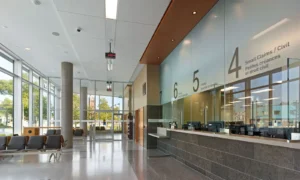
The case later proceeded to trial at the Brampton Courthouse, where the circumstances surrounding her statements became the central issue.
Issues at Trial
The central issue at trial was whether the accused’s statements amounted to a clear and unequivocal refusal, or whether she was still in the process of considering her options.
The defence argued that although the accused said she did not want to take the test, her ongoing questions showed that she had not made a final decision.
The court focused on several key issues:
- Unequivocal Refusal The Crown had to prove that the refusal was clear and final. Statements made while asking questions may not meet that standard.
- Considering Options The accused asked about the consequences and whether she had to comply. This raised the question of whether she was still deciding what to do.
- Timing of Arrest The officer arrested her quickly after her statements. The court had to consider whether she was given a fair opportunity to decide.
- Intent to Refuse A refusal charge requires proof that the accused intended not to comply. Uncertainty or hesitation can create reasonable doubt.
These issues were critical because if the refusal was not clear and deliberate, the charge could not be proven beyond a reasonable doubt.
Judge’s Decision
The trial judge found that the Crown Attorney did not prove beyond a reasonable doubt that the accused made a clear and unequivocal refusal to provide a breath sample.
While the accused did state that she did not want to take the test, the court accepted that these statements were made while she was asking questions and trying to understand her situation. Her repeated inquiries about the consequences and her request to speak with her father showed that she was still considering her options.
The judge confirmed that an accused person is entitled to a brief opportunity to decide how to respond to a breath demand. Although this is not an unlimited right, it must be assessed based on the specific facts of each case.
In this case, the court was not satisfied that the accused had formed the necessary intent to refuse. As a result, there was a reasonable doubt as to whether her conduct amounted to a true refusal.
The accused was found not guilty and the charge was dismissed.
Experienced Criminal Defence
Charitsis Law, Impaired Driving Defence Team
Experience counts in criminal defence. Knowing the court system, the Crown Attorney’s, police, and judges can have a serious impact on how your case proceeds. The reputation and experience of your criminal defence lawyer matters and can influence how your case is handled from the start.
The courts recognize criminal lawyers who prepare thoroughly, challenge the evidence, and present strong and effective defence arguments.
At Charitsis Law, our team of DUI lawyers and criminal defence professionals focuses on reviewing the evidence, guiding you through the court process, and building a clear defence strategy tailored to your case.
Call 647-930-0200 to speak with a criminal defence lawyer at Charitsis Law, and lets just have a conversation about what happened and how we can help you.
Our legal team has years of experience helping individuals facing criminal charges across Ontario. We work together to identify weaknesses in the Crown’s case and take the steps needed to have charges withdrawn or dismissed whenever possible.