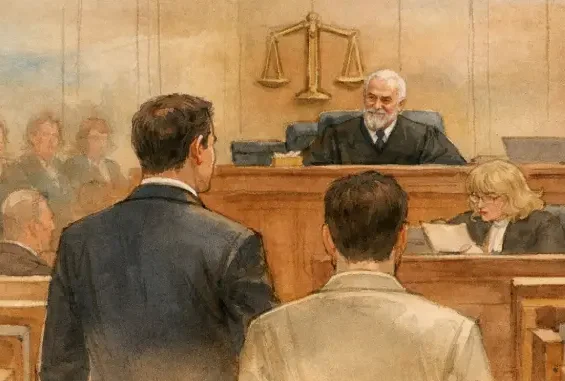
No Contact Orders While on Bail
Need to change a no-contact order? Learn how a bail variation works and how our criminal lawyers can help defend your case.
If you were released from a bail hearing with a no-contact order, you may be wondering whether you can speak to your spouse or partner again, return home, or apply to have the condition changed. In many domestic assault cases, a no-contact order is imposed as a condition of release and can remain in place until the court changes it.
In some domestic assault charges, it maybe possible to apply for a bail variation to change or remove a no-contact condition. Whether that is appropriate depends on your circumstances, the wishes of the complainant, and the position of the Crown.
If you’re looking to change a no-contact order, don’t guess about your options. Speak directly with criminal lawyer Nicholas Charitsis to discuss a bail variation and whether the court may be willing to change your release conditions. Call 416-731-7113 today.
What Is a No-Contact Order?
A no-contact order is a court condition that has been placed upon the accused as a condition of their release from custody pending a trial.
The No Contact order prevents the accused from communicating with another person, usually the complainant in a domestic assault case. This can include direct contact, indirect contact, or even being near certain places.
What a No Contact Order Restricts
In many cases, a no contact order restricts:
- Phone calls, texts, or social media messages
- Attending the same home, workplace, or school
- Contact through friends or family members
These conditions are often strict and enforced immediately. As a result, even a small mistake can lead to new criminal charges. Understanding the exact terms is critical to protecting yourself.
No-Contact Orders & Domestic Assaults
In Ontario, domestic assault charges are handled with a cautious approach. Courts often impose no-contact conditions early in the court process to reduce risk while the case is ongoing.
However, these orders can create real-life problems:
- You may be removed from your home, even if you live there
- You may not be able to speak with your partner or family
- Parenting arrangements can become difficult or restricted
In many cases, the complainant does not control whether the order stays in place. The Crown Attorney makes that decision based on the evidence and public safety concerns.
No-Contact Orders & Bail Variances
Although these orders are common, they are not always permanent. A criminal defence lawyer can take steps to have the conditions changed or lifted depending on the situation.
There are several ways this can happen:
- Bail variation – A formal request to change your release conditions through the court
- Crown consent – In some cases, the Crown Attorney may agree to modify the order
- Court application – A judge can review the situation and decide whether changes are appropriate
Each option depends on the facts of your case, the relationship between the parties, and the overall defence strategy. Acting early can improve your chances of success.
What Happens if You Break a No Contact Order
Breaching a no-contact order is a separate criminal offence. Even if the complainant reaches out to you first, responding can still result in new charges.
If the Crown Attorney learns that there has been an alleged breach of a no-contact order, they may have the accused re-arrested and charged with failing to comply with their release conditions.
The accused may be held in custody until their next court appearance. Alleged breaches of no-contact orders are treated very seriously because they involve failing to comply with a court order made by a judge.
A breach can lead to:
- New criminal charges and a separate prosecution
- Stricter bail conditions or detention
- A negative impact on your existing case
Because of this, it is important to follow the order exactly as written and speak with a criminal lawyer before taking any action.
How a Criminal Defence Lawyer Can Help
A criminal defence lawyer plays a key role in managing no-contact orders and protecting your position in court. The right approach can reduce restrictions and improve your overall outcome.
A lawyer will:
- Review the evidence and assess the strength of the Crown’s case
- Explain your conditions clearly so you do not make a mistake
- Develop a defence strategy tailored to your situation
- Bring a bail variation or court application where appropriate
- Represent you in court and advocate for changes to the order
In many cases, early legal involvement can make a significant difference in how your case progresses.
The Court Process and What to Expect
After being charged, you will go through several stages in the Ontario court system. No-contact conditions are usually imposed at the beginning and may remain in place until the case is resolved.
The process often includes:
- First appearance in court
- Disclosure review of the evidence
- Ongoing discussions with the Crown Attorney
- Possible applications to change release conditions
- Trial or resolution
Each stage creates opportunities to address the no-contact order as part of your overall defence strategy.
Speak With a Criminal Defence Lawyer Today
If you are dealing with a no-contact order in a domestic assault case, getting clear advice early can protect your rights and help you avoid costly mistakes. The goal is always to move your case forward efficiently while working toward having conditions reduced or removed wherever possible.
Call Charitsis Law at 416-731-7113 to speak directly with a criminal lawyer. Your consultation is free, confidential, and focused on helping you take the right next step.
FAQs About No-Contact Orders
Q. What is a no-contact order in a domestic assault case?
A. A no-contact order is a condition imposed by the court that prevents you from communicating with the complainant. In domestic assault charges, this condition is often put in place immediately after your arrest as part of your release or bail.
The order can prohibit direct communication such as calls, texts, or messages, as well as indirect contact through friends or family. It may also restrict you from attending certain places like your home, workplace, or anywhere the complainant is expected to be.
These conditions are enforced strictly, and even minor or accidental contact can result in new criminal charges. A criminal defence lawyer can review your conditions, explain what is allowed, and help you avoid mistakes that could affect your case.
Q. Can the complainant remove the no-contact order?
A. The complainant cannot remove a no-contact order, even if they want contact to resume. In Ontario, once criminal charges are laid, the Crown Attorney takes control of the case.
This means decisions about release conditions are made based on public safety and the strength of the evidence, not just the wishes of the complainant. In many cases, the complainant may express that they are comfortable with communication, but the order remains in place until it is formally changed by the court.
A criminal lawyer can present this information to the Crown and request a variation, but until a judge approves the change, the condition must be followed exactly.
Q. How Do You Remove a No-Contact Order in Ontario?
A. A no-contact order cannot simply be removed because the accused or complainant wants contact to resume. Depending on how the order was imposed, a criminal defence lawyer may ask the court to change or remove the condition, often through a bail variation. The Crown Attorney’s position and the circumstances of the case can affect whether the request succeeds.
This involves asking the court to modify your release conditions, often with the consent of the Crown Attorney. The court will consider several factors, including the nature of the allegations, the relationship between the parties, whether there have been prior incidents, and whether there is a clear plan in place to prevent further issues.
In some cases, conditions may be adjusted to allow limited communication, such as for childcare or financial matters. A criminal defence lawyer will prepare the application, present supporting information, and guide you through the process to improve the chances of success.
Q. What happens if you breach a no-contact order?
A. Breaching a no-contact order is treated as a separate criminal offence and can have serious consequences.
Even if the complainant initiates contact, responding can still result in a charge. Police take these allegations seriously, and a breach can lead to arrest, stricter bail conditions, or detention in custody. It can also weaken your defence and affect how the Crown Attorney approaches your case.
Because of this, it is critical to follow the order exactly as written and speak with a criminal lawyer before taking any action that could be interpreted as contact.
Q. Can you live in the same home with a no-contact order?
A. In most cases, a no-contact order will prevent you from returning to a shared home if the complainant lives there. This can happen even if you are the owner or on the lease.
The condition is designed to separate the parties while the case is ongoing. However, in some situations, a bail variation may allow for a return home with specific terms, such as no communication except for certain purposes or living in separate areas of the residence.
These arrangements require court approval, and a criminal defence lawyer can assess whether this is a realistic option in your case.
Q. How Long Does a No-Contact Order Last in Ontario?
A. A no-contact order usually remains in place until your case is resolved, which could take several months or longer depending on the complexity of the matter.
In some cases, the condition may be changed earlier through a successful bail variation. If the case proceeds to trial or resolution, the court may also impose conditions as part of sentencing or probation. Understanding how long the order may last and whether it can be changed is an important part of your defence strategy.
Q. Why is it important to speak with a criminal defence lawyer early?
A. Early legal advice can make a significant difference in how your case progresses.
A criminal defence lawyer will review the evidence, explain your release conditions, and identify opportunities to challenge or change a no-contact order.
They can communicate with the Crown Attorney, prepare a bail variation, and represent you in court. In many cases, taking the right steps early can reduce restrictions, avoid additional charges, and improve your overall outcome.