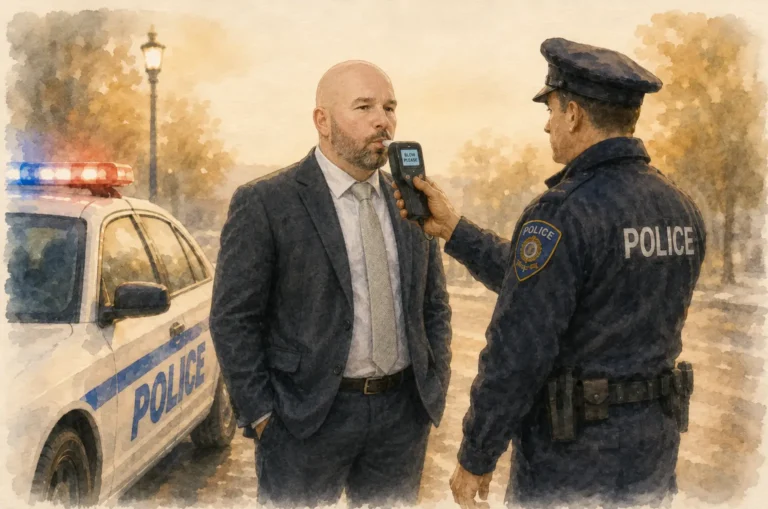
Roadside Breath Demands & Right to Counsel
Canadian Criminal Case Law Summary
As Toronto DUI lawyers, Charitsis Law has defended people charged with impaired driving and other DUI offences for more than 25 years throughout Toronto and the GTA.
Led by former Crown Attorney Nicholas Charitsis, our Toronto criminal lawyers identify weaknesses in the Crown’s evidence and develop effective defence strategies that have helped many clients successfully fight DUI charges.
If you have been charged with a DUI offence, speak directly with former Crown Attorney Nicholas Charitsis. He will review your case, answer your questions, and explain how your DUI charge can be defended. Call 416-731-7113 today for a confidential consultation.
Understanding Roadside Breath Demands
As refuse roadside breathalyzer lawyers, we rely on R. v. Thomsen when reviewing whether police properly handled a roadside breath demand. The Supreme Court examined whether delaying access to a lawyer during roadside screening violates the Charter.
The Court confirmed that:
- A roadside stop is a form of detention: Once detained, Charter rights are triggered.
- The right to counsel normally applies immediately: Section 10(b) protects access to a lawyer upon detention.
- Police may briefly delay access to counsel for roadside testing: This delay is justified because alcohol evidence changes over time.
- The delay must be limited and tied to screening only: The exception does not extend beyond the roadside stage.
This decision established the legal structure still used in Ontario refusal cases today.
Relevant Case Law:
R. v. Thomsen — Supreme Court of Canada (1988 SCC)
[View the full decision on CanLII (Canadian Legal Information Institute)]
What Happened in R. vs Thomsen
A police officer conducting spot checks stopped the accused’s vehicle because it had a defective headlight. During the stop, the officer detected an odour of alcohol on the driver’s breath and made a formal demand that he provide a breath sample into a roadside screening device.
The accused refused to provide the sample. The officer then asked him to accompany him to the police car and sit inside. The officer gave the accused two more opportunities to provide the requested breath sample, but he refused each time.
At no point did the officer tell the accused that he had a right to retain and instruct a lawyer without delay. The accused was eventually released and charged with refusing to comply with the roadside breath demand.
At trial, the judge dismissed the charge. The judge found that the accused had been detained when police required him to comply with the roadside breath demand. As a result, his right to be informed of his right to counsel under section 10(b) of the Canadian Charter of Rights and Freedoms had been engaged.
The Crown successfully appealed the acquittal, and a new trial was ordered. The Ontario Court of Appeal upheld that decision, and the case eventually reached the Supreme Court of Canada. The central question was whether a roadside breath demand amounted to detention and, if so, whether a driver had to be given an opportunity to speak with a lawyer before providing the breath sample.
The Supreme Court agreed that the accused was detained for Charter purposes. A roadside breath demand carries legal consequences, including potential criminal liability for refusing to comply. However, the Court held that the right to consult a lawyer could be temporarily limited at the roadside because the screening test must be conducted quickly.
The accused’s appeal was dismissed. The decision established the important principle that although a driver is detained when required to provide a roadside breath sample, the driver does not have the right to delay the roadside test in order to consult a lawyer first.
The Legal Issue Before the Court
The Supreme Court had to decide whether police could demand a roadside breath sample before giving a driver access to a lawyer. The issue was whether this short delay violated section 10(b) of the Charter.
The Court examined:
- A traffic stop becomes detention when police exercise authority: Drivers are not free to leave once stopped.
- Section 10(b) rights are triggered at detention: Access to counsel normally follows immediately.
- Public safety requires immediate roadside testing: Breath evidence can disappear quickly.
- The delay must remain narrow and temporary: It cannot continue after arrest.
The Court balanced public safety with constitutional protections.
What the Court Confirmed
The Supreme Court confirmed that the right to counsel is triggered once a person is detained. However, the Court ruled that a short and immediate delay is justified for roadside breath screening.
The Court held that:
- Police may demand a roadside breath test right away: Drivers do not have the right to call a lawyer first.
- The delay is justified by urgency: Alcohol levels in the body change over time.
- The exception applies only during roadside screening: It does not apply after arrest.
- Access to counsel must be provided without delay after arrest: The Charter right becomes fully active at that stage.
This ruling remains a cornerstone of refusal law in Ontario.
Why This Case Matters in Refusing a Roadside Breathalyzer Charges
A refusal charge depends on whether the breath demand was lawful. If the demand was not made properly, the charge may be challenged in court.
In real Ontario refusal cases, key issues often include:
- Whether detention occurred before the demand was made: Charter rights attach at detention.
- Whether the demand was clearly explained: Drivers must understand what is required.
- Whether the roadside stage was extended improperly: The exception is narrow.
- Whether access to counsel was delayed after arrest: Any delay must be justified.
- Whether the refusal occurred during lawful screening: The demand must meet legal standards.
Thomsen gives courts the framework to review these procedural steps.
How This Case Shapes Defence Strategy
This case requires careful review of the exact timing of events during a traffic stop. In refusing a roadside breathalyzer cases, small details can become very important.
A defence strategy may involve:
- Determining the exact moment detention began: Charter rights attach at that point.
- Reviewing when the demand was made: It must fall within lawful roadside screening.
- Confirming when arrest occurred: The roadside exception ends at arrest.
- Examining when access to counsel was offered: Any improper delay may raise Charter concerns.
- Raising Charter arguments where appropriate: Courts may exclude evidence if rights were breached.
In many refusal cases, procedure becomes the central battleground.
What This Case Means for You
If you are facing refusing a roadside breathalyzer charges in Ontario, the timing of your detention, the breath demand, and access to a lawyer can directly affect your case. The Crown must prove that police followed the proper legal steps and respected your Charter rights.
Call 416-731-7113 now to speak directly with a criminal defence lawyer and get immediate guidance about your situation.
Absolutely. Here is the FAQ section with a proper SEO-friendly title added above it, consistent with your structure and optimized for refusing a roadside breathalyzer charges in Ontario:
FAQs About Refusing a Roadside Breathalyzer in Ontario
Q. What did R. v. Thomsen decide?
A. The Supreme Court decided that police may demand a roadside breath sample before allowing a driver to speak to a lawyer. The Court said this short delay is allowed because roadside testing must happen quickly. Alcohol levels change over time, so police are permitted to act immediately. However, this delay only applies during the roadside screening stage.
Q. Does the right to a lawyer apply during a traffic stop in Ontario?
A. Yes. A traffic stop is considered detention under the Charter, which means your right to counsel is triggered. Normally, you would have the right to speak to a lawyer right away. But in roadside breath testing situations, that right can be delayed briefly. After arrest, police must provide access to a lawyer without delay.
Q. Can this case help defend a refusal charge?
A. Yes. Refusing a roadside breathalyzer charge depends on whether the demand was lawful. If police delayed access to a lawyer longer than allowed or mishandled the stop, the defence may raise Charter arguments. Courts look closely at timing and procedure in these cases.
Q. When must police give me access to a lawyer?
A. Police must provide access to counsel after arrest. The roadside exception only applies during immediate screening. Once the roadside stage ends and an arrest occurs, your right to call a lawyer must be provided promptly. Any improper delay can become important in court.
Q. Why is it important to speak to a criminal defence lawyer quickly after a refusal charge?
A. Refusing a roadside breathalyzer in Ontario carries serious penalties, including a driving prohibition and possible jail time. A lawyer can review the exact sequence of events during your stop. Early legal review helps identify whether your Charter rights were respected. Small timing issues can sometimes affect the outcome of the case.
If you’d like, I can now generate the matching FAQ schema block to align exactly with this visible content.