
Careless Driving Lawyer
As careless driving lawyers, Charitsis law provides qualified and experienced advice and representation for drivers charged with careless driving in Ontario.
If you have been charged with careless driving your licence, your record, and your future are at risk. Many people do not realize how serious the charge is until they see the potential penalties.
As traffic ticket lawyers, Charitsis law focus is on helping you move forward with a clear plan and a strong defence strategy. Our approach is practical, experienced, and built around achieving a winning result, our defence includes:
- Review & trial preparation – We examine police notes, reconstruction reports, witness statements, and disclosure to find weaknesses in the case.
- Challenge the charge – If the evidence does not support careless driving, we work to have the charge reduced or dismissed.
- Court process – We appear at court for most appearances, including the pre-trial with the Provincial Prosecutor. You will understand each step, from your first appearance to resolution, with clear advice along the way.
- Focus on protecting your licence and record – Every strategy is aimed at avoiding long-term consequences that affect your driving and insurance.
Taking action early can make a meaningful difference in how your case is handled and how it resolves.
If you have been charged with careless driving, call Charitsis Law at 647-930-0200 to speak directly with a lawyer. Your call is free and confidential, and you will get clear answers about your situation right away.
What Is Careless Driving in Ontario?
Careless driving is defined as driving without due care and attention or without reasonable consideration for other drivers using the roadway. Under the Highway Traffic Act of Ontario, this definition is broad, which means many different types of driving behaviour can lead to a charge depending on the circumstances.
In many cases, a police officer forms their opinion based on what they observed in the moment or what witnesses may have told them. However, that does not automatically mean the charge is proven in court. The court prosector must still present evidence that shows the driving fell below the standard expected of a reasonable driver.
There are four main types of careless driving charges, and each one carries different levels of seriousness and potential penalties:
- Careless driving based on officer observation – An officer may charge you based on how you were driving, even if there was no accident. The officer would suggest that the driver was driving without due care or consideration for other drivers, a sometimes very board statement.
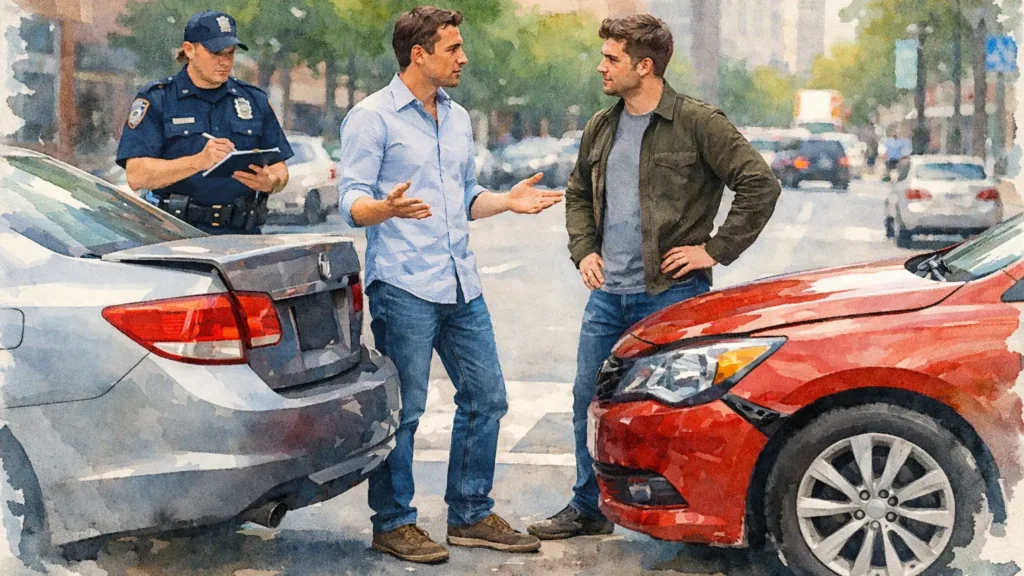
- Careless driving involving a minor accident – These charges arise when a collision occurs but there are no serious injuries. Property damage and fault are often key issues. The suggestion being that the driver was not driving carefully, e.g. driving too fast for the road conditions.
- Careless driving causing bodily harm – This is a more serious charge where someone is injured. The court and any victims will be pushing the prosecutor for stronger penalties, including the risk of a licence suspension.
- Careless driving causing death – This is the most serious form of the charge and can lead to severe penalties, including long-term driving prohibitions and possible jail time. These are extensive prosecutions usually involving numerous witnesses, both civilian and police officers such as accident reconstructionists.
In each situation, the Crown Attorney will have a different attitude about how they proceed. As well there may be other factors affecting their prosecution including victims and other persons involved that can influence the prosecution and subsequent penalties.
Penalties for Careless Driving in Ontario
The penalties for careless driving depend heavily on what actually happened. The law treats this offence on a spectrum, meaning the outcome can vary from a standard traffic charge to a much more serious situation involving injury or death.
Because of this, the court will look closely at the facts, the level of risk created, and the consequences of the driving. As a result, two careless driving charges can lead to very different outcomes depending on the circumstances.
Here is how penalties typically break down:
- Standard careless driving (no accident or minor incident) – You face fines up to $2,000, 6 demerit points, and a possible licence suspension of up to 2 years.
- Careless driving involving a minor accident – Penalties are similar, but the court may take a stricter view depending on damage, fault, and surrounding facts.
- Careless driving causing bodily harm – This is treated much more seriously, with fines up to $50,000, a mandatory licence suspension (up to 5 years), and possible jail time.
- Careless driving causing death – The most serious form, carrying fines up to $50,000, long-term licence suspensions, and a real risk of jail depending on the circumstances.
Beyond the court penalties, a conviction can also lead to a licence suspension that affects your ability to drive, work, and manage daily responsibilities. Even a short suspension can create serious disruption depending on your situation.
In addition, even a minor careless driving conviction will have a major impact on your insurance. Rates often increase significantly and can remain elevated for three years or more, making the long-term cost much higher than the fine itself.
If you have been charged with careless driving, call Charitsis Law at 647-930-0200 to speak with a lawyer.
How Careless Driving Charges Are Proven in Court
Careless driving charges are not automatic, even if an officer issued a ticket at the roadside. In court, the Provincial Prosecutor must prove the case using evidence that shows your driving fell below the standard of a reasonable driver in the same situation.
This is where many careless driving cases can be challenged. The charge often relies on interpretation, opinion, and the surrounding circumstances rather than clear-cut proof.
Here is how these cases are typically built and tested in court:
- Officer observations and notes – The officer will describe what they saw, including speed, lane position, reactions, and overall driving behaviour.
- Accident evidence (if applicable) – In collision cases, the Crown may rely on diagrams, photos, and damage reports to explain how the incident occurred. In serious accidents the police will usually have an accident reconstructionist come and do a detailed report giving a detailed assessment of the accident, the causes, speeds involved, and any other relevant issue.
- Witness statements – Other drivers or passengers may provide statements, but these accounts can sometimes be inconsistent or incomplete.
- Your driving in context – The court must consider road conditions, traffic, weather, and any sudden events that may explain your actions.
In many cases, the defence strategy focuses on showing that the evidence does not meet the legal threshold for careless driving. For example, a momentary error in judgment or a difficult driving condition does not always amount to careless driving under the law.
Understanding how the evidence is presented and challenged is key. A strong defence looks closely at every detail to determine whether the charge can be reduced, withdrawn, or successfully defended at trial.
Careless Driving Lawyers – Defence Strategies
As careless driving lawyers we focus on how the evidence is tested in court, especially through cross-examination and careful analysis of what actually happened. A careless driving charge does not automatically lead to a conviction, and many cases turn on small but important details.
These trials often come down to what witnesses actually saw versus what they think they saw. Differences in perception, memory, and assumptions can create real doubt when the evidence is examined closely. Where a careless driving charge goes to trial, strong cross-examinations of witnesses and police officers is required, often many times revelling to the defence and court.
Here are some of the most effective defence strategies:
- Cross-examining witnesses carefully – We focus on what each witness truly observed in the moment, not what they later assumed or concluded. This often reveals gaps between perception and fact that can weaken the Crown’s case.
- Identifying conflicting statements – Police notes, witness statements, and physical evidence do not always line up. Highlighting these inconsistencies can raise reasonable doubt about how the incident actually occurred.
- Challenging the officer’s conclusions – An officer may form an opinion quickly at the scene, but that opinion must be supported by clear and reliable evidence. We test whether those conclusions are justified under scrutiny. Was the driver really at fault or has the officer mixed up what may have actually happened, and/or what lead up to the event.
- Arguing a more appropriate charge applies – In some cases, the facts may point to a lesser offence, such as an improper turn or failure to yield. Showing that the driving fits a different, less serious charge can significantly change the outcome.
- Examining the full context of the driving – Road conditions, traffic flow, weather, and sudden events all play a role. When these factors are properly considered, the driving may be seen as reasonable in the circumstances.
- Testing whether the legal standard is met – The Crown must prove that the driving was a clear departure from what a reasonable driver would do. Not every mistake meets that threshold, and this is often a key issue at trial. Do the facts support the charge, many times they do not.
In many careless driving trials, the outcome depends on how well the evidence is challenged. As careless driving lawyers, we prepare a detailed and strategic defence exposing any weaknesses that are not obvious at first and while looking to create reasonable doubt in the judge’s mind, while pushing for a dismissal.
What to Expect in the Court Process
A careless driving lawyer handles the court process for you from start to finish, so you do not have to navigate it alone. In most cases, you will not need to attend court personally unless the matter proceeds to trial.
There are important reasons for this. Court appearances involve legal procedures, evidence rules, and strategic decisions that can affect your case. Saying the wrong thing or taking the wrong step, even unintentionally, can make defending the charge more difficult.
Here is how the process typically works:
- We attend court on your behalf – Your lawyer appears in court, speaks with the prosecutor, and manages all procedural steps so you do not have to attend routine court dates. This helps avoid unnecessary risks and keeps your defence focused.
- Disclosure is obtained and reviewed – We collect all evidence from the Crown, including officer notes and witness statements, and analyze it for weaknesses and inconsistencies.
- Ongoing communication and guidance – You are kept informed at every stage. We explain your options clearly and help you make the right decisions as the case progresses.
- Strategic handling of the case – Every step is managed with a defence strategy in mind, including how the evidence will be challenged and presented in court.
- Trial if necessary – You would only attend court if your case proceeds to trial. At that point, we prepare you fully so you know exactly what to expect.
In many careless driving cases, the strongest results come from careful handling of the process behind the scenes. Having a lawyer manage your case helps avoid mistakes and ensures your defence is presented properly from the beginning.
Can You Defend Yourself for Careless Driving?
It may seem straightforward to attend court and explain your side, but defending yourself on a careless driving charge can create problems you may not expect. In many cases, the court process involves technical legal issues that can affect the outcome before the trial even begins.
Do you feel comfortable appearing in court, standing before a judge, cross-examining a police officer while the provincial prosecutor is ready to challenge your every word?
Identity Evidence
The prosecution must prove that you were the driver.
If you attend court and identify yourself, you may unintentionally help prove their case. When you are represented, the prosecutor must establish identity through proper evidence, which can sometimes create a defence opportunity.
Errors on the Information
There may be mistakes on the charging document.
By appearing in court, you submit to the court’s jurisdiction, meaning if there’s a mistake on the charging document, it may not matter any more. Many times where there are errors our defence team can raise this without you appearing, and possibly having the charge dismissed.
These are just two examples, and many other legal issues may apply depending on the facts of your case.
Why Work With a Careless Driving Lawyer
If you have been charged with careless driving, the decisions you make early can have a lasting impact on your case. Can you afford not to be properly represented? A careless driving lawyer helps you understand the situation clearly and take the right steps from the beginning.
Many people consider handling the charge on their own. However, careless driving cases often involve detailed evidence, legal arguments, and court procedures that are not always straightforward.
Working with a lawyer gives you a clear advantage:
- Experience with careless driving cases – We understand how these charges are proven in court and where the weaknesses in the evidence are often found. This allows us to build a defence strategy based on real courtroom experience.
- A focused approach to results – Our goal is always to resolve your case with the least amount of time and disruption, while working toward having the charge reduced or dismissed whenever possible.
- Clear advice from the start – You will know what you are facing, what your options are, and what to expect as your case moves through the court process.
- Protection of your licence and record – Every decision is made with your long-term interests in mind, including avoiding licence suspensions and minimizing insurance impact.
- Strong representation in court – If your case proceeds to trial, we are prepared to challenge the evidence, cross-examine witnesses, and present your defence effectively.
In many cases, the difference between a conviction and a successful outcome comes down to how the case is handled. Having a qualified legal representation, like a careless driving lawyer ensures your defence is built properly from the start and carried through every stage of the process.
If you have been charged with careless driving, call Charitsis Law at 647-930-0200 to speak directly with a lawyer. Your call is free and confidential, and you will get clear answers about your situation right away.
FAQs from our Careless Driving Lawyers
Q. Is careless driving a criminal charge?
A. No. Careless driving is not a criminal charge. It is an offence under the Ontario Highway Traffic Act. However, it is still treated as a serious driving offence and can carry major consequences.
A. In many cases, the penalties can include 6 demerit points, a possible licence suspension, significant fines, and much higher insurance rates. Even though it is not a criminal offence, a careless driving conviction can still affect your driving record and your ability to keep insurance costs under control.
Q. How do you get a careless driving ticket dismissed in Ontario?
A. A careless driving ticket can be dismissed when the Crown cannot prove the charge beyond a reasonable doubt. That usually depends on the quality of the evidence and whether the facts truly meet the legal definition of careless driving.
A. In many cases, the defence focuses on weaknesses in the officer’s observations, conflicting witness statements, missing details, or evidence that points to a different and less serious offence. A careless driving lawyer reviews the disclosure carefully and looks for every opportunity to challenge the case.
Q. What is the best defence for careless driving?
A. The best defence depends on the facts of the case. There is no single argument that works in every situation because careless driving charges can arise from very different events, including officer observations, minor accidents, collisions involving bodily harm, or fatal incidents.
A. In many careless driving cases, the strongest defence involves showing that the driving did not fall below the legal standard, that witness evidence is unreliable, or that the officer’s conclusion is not supported by the full circumstances. Sometimes the best defence is that a different Highway Traffic Act charge would have been more appropriate.
Q. Why do I need to fight my ticket?
A. Many people choose to fight a careless driving ticket because the consequences can be much more serious than they first appear. Paying or pleading guilty may seem easier in the short term, but the long-term cost can be significant.
A. A conviction can affect your licence, your insurance, and your driving record for years. Even a minor careless driving conviction can cause dramatic insurance increases for three years or more. Fighting the ticket gives you the chance to challenge the evidence and work toward a better result.
Q. How long does careless driving stay on my record?
A. A careless driving conviction usually stays on your Ontario driving record for three years from the date of conviction. During that time, it can be seen by insurers and can continue to affect your premiums.
A. In many cases, the insurance impact lasts at least that long and sometimes longer depending on the insurer’s underwriting rules. This is one reason why people often choose to speak with a careless driving lawyer before deciding whether to plead guilty.
Q. What is the difference between careless driving and dangerous driving?
A. Careless driving and dangerous driving are very different offences. Careless driving is a provincial offence under the Ontario Highway Traffic Act, while dangerous driving is a criminal offence under the Criminal Code of Canada.
A. Dangerous driving is generally more serious because it involves a much higher legal threshold and can lead to a criminal record, probation, and jail. Careless driving is not criminal, but it can still carry serious penalties such as licence suspensions, large fines, demerit points, and major insurance consequences.