
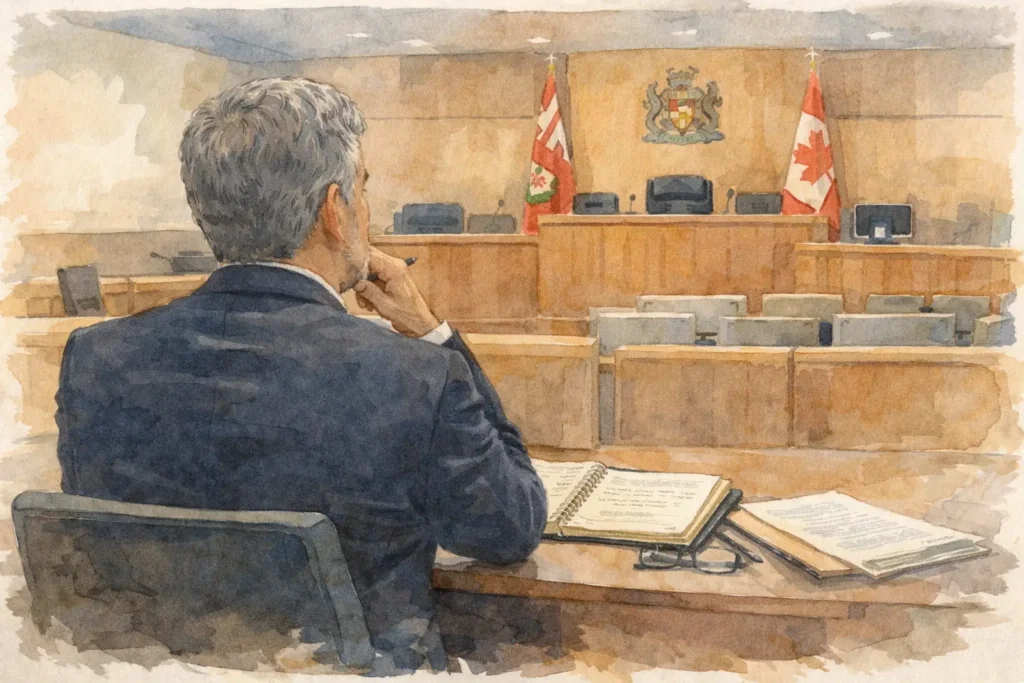
Toronto Sexual Assault Lawyers
Toronto sexual assault lawyers represent individuals facing sexual assault allegations in Toronto courts. Being accused of sexual assault can affect a person’s reputation, career, and family life. These cases are taken seriously, and the consequences of a conviction can be severe.
As sexual assault lawyers our role to you is:
- Provide clear legal advice: We explain the allegation, the legal process, and the options available to you so you can make informed decisions about your case.
- Communicate With Crown Attorney: We review the evidence, speak with the Crown Attorney on your behalf, and advance your defence through the court process.
- Defending & Representing you where the case goes to trial: If the case proceeds to trial, we represent you in court, challenge the evidence, and prepare the defence and legal arguments.
If you have been accused of sexual assault, the accusation is only an allegation. The Crown must prove the charge beyond a reasonable doubt in court. As Toronto sexual assault lawyers, we provide experienced legal advice, guide you through the court process, and defend you against the charge in criminal court.
If you need to speak with a criminal lawyer now, call Charitsis Law at 647-930-0200.
What Is Sexual Assault Under Canadian Law?
The Criminal Code of Canada treats sexual assault as sexual touching that occurs without consent. Courts focus on whether the complainant consented to the sexual activity and what evidence exists about what occurred.
Defending these allegations often requires careful review by a lawyer experienced in sexual assault charges and criminal defence. Our sexual assault lawyers have extensive experience handling these cases in Toronto courts.
What is Consent & Sexual Assault Allegations
Consent means that a person voluntarily participates in sexual activity. If a person does not consent, or is legally unable to consent, the law may find that the sexual activity occurred without consent.
Situations where consent may be disputed can include:
- one person saying they did not agree to the sexual activity
- allegations involving alcohol or intoxication
- situations involving pressure, threats, or abuse of trust
In many sexual assault cases there are no witnesses and little physical evidence. Courts must often examine the circumstances and determine what happened based on the evidence presented.
Types of Sexual Assault Charges in Toronto
As Toronto sexual assault lawyers, we represent individuals facing a range of sexual offence allegations in Toronto courts. While many cases involve the basic offence of sexual assault, the Criminal Code also creates more serious variations depending on the circumstances of the allegation.
These charges can differ based on factors such as the level of force alleged, whether a weapon was involved, or whether serious injuries are claimed.
Common Sexual Assault Charges Under the Criminal Code
Sexual assault-related charges in Toronto may include:
- Sexual Assault: This charge typically involves allegations that sexual touching took place without consent. Many cases focus on whether consent was given and what occurred between the individuals involved.
- Sexual Assault with a Weapon: This offence may be alleged where a weapon was used, threatened, or present during the incident, or where the allegation includes threats or intimidation.
- Aggravated Sexual Assault: This is the most serious form of sexual assault and usually involves allegations that the complainant suffered significant bodily harm during the incident.
- Sexual Interference: This offence relates to allegations involving sexual contact with a person under the age of 16. The law treats allegations involving minors very seriously.
- Invitation to Sexual Touching: This charge may arise where someone is alleged to have encouraged or invited a person under the age of 16 to engage in sexual touching.
The type of sexual assault charge can affect how the case proceeds and the possible penalties a person may face if convicted.
Penalties for Sexual Assault Convictions
As Toronto sexual assault lawyers, we are often asked what could happen if you are convicted of sexual assault. The penalties can be serious and may affect many areas of your life, for years to come.
Courts consider several factors when deciding a sentence. These include the nature of the allegation, the age of the complainant, the level of force alleged, and whether you have a prior criminal record.
Consequences of a Sexual Assault Conviction
Possible penalties may include:
- Criminal record: A conviction creates a permanent criminal record. Many jobs and volunteer roles involving children require a vulnerable sector check, such as teaching, coaching youth sports, or working with community programs.
- Sex offender registry: Courts often order individuals convicted of sexual assault to register under the Sex Offender Information Registration Act (SOIRA). A person on the registry must report personal information to police and keep that information updated.
- Jail sentences: Judges may impose jail in more serious cases. The length of the sentence depends on the circumstances of the offence and the evidence presented in court.
- Restrictions involving children: Courts can impose orders that prevent you from having unsupervised contact with individuals under the age of 16. These orders may also restrict access to places where children are present.
- Probation orders: Judges may place a person on probation after sentencing. Probation requires following strict conditions set by the court.
- Social and personal consequences: A sexual assault conviction can damage a person’s reputation and relationships. It can also affect employment opportunities and community involvement.
Because the consequences of a sexual assault conviction can be serious and long-lasting, speaking with our sexual assault lawyers can help you understand your situation and how we can work to defend you.
You can speak directly with a lawyer at Charitsis Law now by calling 647-930-0200 for a confidential consultation.
DNA Database Orders – National DNA Data Bank
Courts frequently require individuals convicted of designated sexual offences to provide a DNA sample for the National DNA Data Bank. Police store this sample in the national database and may use it during criminal investigations.
Because of these potential consequences, many people seek legal advice soon after they are charged. Our Toronto sexual assault lawyers provide advice and represent individuals facing these allegations in Toronto courts.
“I was falsely accused of serious assault charges, and Nick helped me fight back.”— Client Review
What the Crown Must Prove in a Sexual Assault Case
As Toronto sexual assault lawyers, we explain to clients that the Crown Attorney must prove the charge before a court can convict someone of sexual assault. In Canadian criminal law, the burden of proof rests with the prosecution.
The Crown must prove the allegation beyond a reasonable doubt. This is the highest standard of proof in the justice system. If the Crown cannot meet that standard, the court must find the accused not guilty.
Key Elements the Crown Must Prove
In most sexual assault cases, the Crown must prove several key elements:
- Sexual touching occurred: The Crown must show that physical contact of a sexual nature took place between the individuals involved.
- There was no consent: The Crown must prove the complainant did not agree to the sexual activity. In some situations, the law says a person cannot legally give consent, such as when the person is underage, unconscious, or otherwise incapable of consenting.
- Knowledge of no consent: The Crown must show the accused knew there was no consent, ignored clear signs that consent did not exist, or believed consent existed without a reasonable basis.
Many sexual assault cases involve two different versions of events. There are often few witnesses and limited physical evidence. Courts may examine credibility and the surrounding circumstances when deciding the case.
As Toronto sexual assault lawyers, we provide clear legal advice, guide clients through the court process, and defend them against these allegations in Toronto criminal courts.
Consent and Sexual Assault Allegations
We often see that the central issue in many sexual assault cases is whether consent existed at the time of the alleged incident. In Canadian criminal law, consent must be given voluntarily and at the time the sexual activity occurs.
Consent cannot be assumed, and it cannot be based on past interactions between the individuals involved. The court focuses on what happened during the specific incident being examined.
Situations Where the Law Says Consent Is Not Possible
In some situations, the law says a person cannot legally give consent. If this occurs, the Crown may argue that the accused should have known consent was not possible.
Examples include situations where a person:
• is under the legal age of consent
• is unconscious or asleep
• is too intoxicated to understand what is happening
• is under threats, pressure, or abuse of authority
When these circumstances exist, the law may treat the situation as no consent, even if the accused believed otherwise.
Reasonable Belief in Consent
Another key issue in many sexual assault cases is whether the accused had a reasonable belief that consent existed at the time of the interaction.
Courts often examine the surrounding circumstances, the communication between the individuals, and the steps taken by the accused to confirm consent.
If you are facing a sexual assault charge in Toronto, you can speak directly with a criminal lawyer at Charitsis Law about your situation. These conversations are confidential and handled with discretion. Your initial call is free and without obligation. Call 647-930-0200 to speak with a lawyer now.
Defending Sexual Assault Charges in Toronto
A sexual assault charge is a serious criminal allegation that can affect many areas of a person’s life. These cases often involve detailed evidence, competing versions of events, and credibility assessments by the court.
Because of the potential consequences, it is important to obtain advice from lawyers experienced in defending sexual assault charges. Our sexual assault lawyers review the evidence carefully, explain the court process, and represent individuals facing these allegations in Toronto criminal courts.
Bail Hearings and Release Conditions
In many sexual assault cases, the accused may be held by police and required to attend a bail hearing before being released. At a bail hearing, a judge decides whether the accused can be released while the case proceeds through the court system.
If bail is granted, the court will usually impose conditions of release. These conditions may include avoiding contact with the complainant, staying away from certain places, or following other restrictions ordered by the court.
Some bail conditions can be very restrictive or difficult to follow. A defence lawyer can review these conditions and, in appropriate cases, ask the court to change or vary them, through a Bail Variation.
Disclosure and Reviewing the Evidence
After a charge is laid, the Crown Attorney must provide the defence with the evidence gathered by police. This information is called disclosure.
Disclosure may include witness statements, police notes, text messages, video recordings, or forensic reports. Careful review of the disclosure allows the defence to understand the allegation and determine how the case should proceed.
Pre-Trial Discussions with the Crown
After reviewing disclosure, the defence lawyer may meet with the Crown Attorney to discuss the case. This step is often called a Crown pre-trial.
During a pre-trial the lawyers review the evidence, identify the issues in the case, and consider how the matter may proceed.
In some situations, the lawyers may discuss whether the case can resolve without a trial. Depending on the evidence, this may involve discussions about a lesser charge, a peace bond, or other possible outcomes.
Judicial Pre-Trial
If the case is expected to proceed to trial, the lawyers may attend a judicial pre-trial with a judge.
At this meeting, the judge and the lawyers discuss the issues in the case, the expected length of the trial, and any legal matters that should be addressed before trial.
Trial
If the case does not resolve, the matter then proceeds to trial. At a sexual assault trial, the Crown presents its evidence and must prove the allegation beyond a reasonable doubt.
If the Crown cannot meet this burden of proof, the court must find the accused not guilty.
Our goal is to provide clear legal advice, build a strong defence, and work toward the best possible outcome, whether that means charges being withdrawn, reduced, or representing you at trial.
“I was falsely accused of serious assault charges, and Nick helped me fight back.”
— Muzammil A, Toronto
Meet Our Toronto Sexual Assault Lawyers
The Toronto sexual assault lawyers at Charitsis Law defend individuals charged with sexual assault offences in Toronto and throughout the GTA, supported by over 25 years of criminal defence experience in Ontario courts.






Experience Counts in Criminal Defence
Sexual assault allegations are serious and often involve complex legal issues. Defending these cases requires careful preparation and lawyers who understand how the criminal courts operate.
Our team of sexual assault lawyers regularly represents individuals in the Toronto criminal courts, including the Ontario Court of Justice at 10 Armoury Street in downtown Toronto, where most of these cases are heard.
When you are facing a sexual assault allegation, experience and qualified legal advice can make an important difference in how your case is defended.
“Nicholas explained the process clearly and achieved a result of no criminal record. Even the judge commented that my lawyer worked out an excellent resolution.” R. Asgarpour Toronto
Publication Bans in Sexual Assault Cases
In many sexual assault cases, the court may impose a publication ban. A publication ban is a court order that prevents the media or the public from publishing information that could identify the complainant.
These bans are common in sexual assault cases because the law aims to protect the privacy of individuals who make allegations of sexual assault.
What a Publication Ban Does and Does Not Do
A publication ban protects the identity of the complainant, but it does not prevent the criminal charge from being reported.
This means that media outlets may still report that a person has been charged with sexual assault and may publish information about the court proceedings.
Each case is different, and the scope of a publication ban may vary depending on the circumstances and the orders made by the court.
A publication ban usually means that the complainant’s name cannot be published in newspapers, television reports, or online media coverage of the case.
Speak With a Toronto Sexual Assault Lawyer
If you are facing a sexual assault charge in Toronto, you can speak directly with a criminal lawyer at Charitsis Law to discuss your situation. These conversations are handled in confidence and with discretion.
If you are facing a sexual assault charge in Toronto, you can speak directly with a criminal lawyer at Charitsis Law about your situation.
These conversations are confidential and handled with discretion. Your initial call is free and without obligation. Call 647-930-0200 to speak with a lawyer now.
Frequently Asked Questions About Sexual Assault Charges in Toronto
Q. What evidence is needed in a sexual assault case?
A. Sexual assault cases may involve several different types of evidence. This can include statements from the complainant, witness testimony, text messages or communications between the parties, police notes, and sometimes medical or forensic evidence. In many cases there are no independent witnesses, so the court examines the evidence and surrounding circumstances to determine what occurred.
Q. What is the burden of proof for sexual assault in Canada?
A. In Canada, the Crown Attorney must prove a sexual assault charge beyond a reasonable doubt. This is the highest standard of proof in the criminal justice system. The court must be satisfied, based on the evidence presented, that the offence was proven according to the law before a conviction can occur.
Q. What happens in court for a sexual assault charge?
A. After a charge is laid, the case proceeds through several stages in the Ontario criminal court system. These may include a bail hearing, court appearances, disclosure of evidence, discussions between the defence lawyer and the Crown Attorney, and in some cases a trial where the court hears the evidence and determines the outcome.
Q. How long do sexual assault cases usually take?
A. The timeline for a sexual assault case can vary depending on the circumstances of the allegation and the complexity of the evidence. Some cases resolve earlier in the court process, while others may take longer if they proceed to trial. Criminal cases often take several months or more to move through the court system.
Q. Do people go to jail for sexual assault in Canada?
A. Sexual assault is a serious criminal offence in Canada and can result in a range of penalties depending on the circumstances of the case. In more serious cases, a court may impose a jail sentence. In other situations, the sentence may involve probation, conditions imposed by the court, and other legal consequences.
Q. What are the three levels of sexual assault in Canada?
A. The Criminal Code recognizes three levels of sexual assault offences. These include sexual assault, sexual assault with a weapon, threats, or causing bodily harm, and aggravated sexual assault. The level of the charge depends on the circumstances of the allegation and the harm that is alleged to have occurred.