What Does Beyond a Reasonable Doubt Mean?
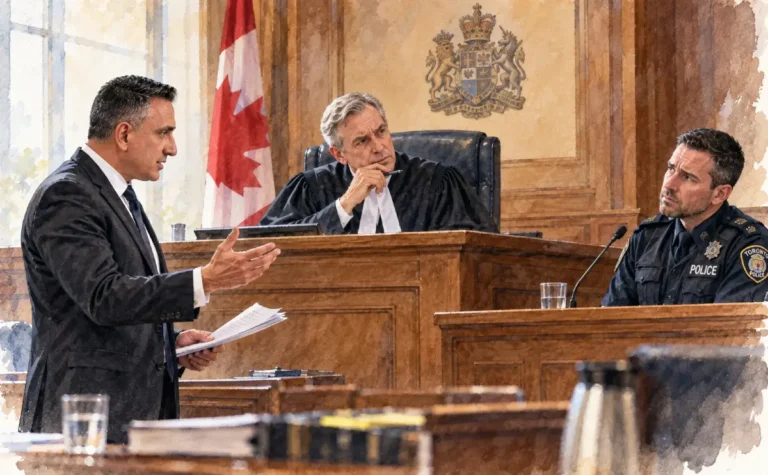
Beyond a reasonable doubt is the standard of proof the Crown must meet in every criminal trial in Canada.
The Crown Attorney must prove every essential element of the charge. If the judge or jury has a reasonable doubt about the accused person’s guilt, the court must find them not guilty.
Charged with a criminal offence? Toronto criminal lawyer Nicholas Charitsis is a former Crown Attorney with over 20 years of criminal law experience.
At Charitsis Law, our criminal defence lawyers examine the evidence, challenge weaknesses in the Crown’s case, and fight criminal charges. With hundreds of successful cases and over 350 Google reviews, we have the experience to help you fight your charges.
Call 416-731-7113 to speak directly with Nicholas Charitsis about your case.
What Is Reasonable Doubt?
Reasonable doubt means you are not fully sure something is true, and you have a good reason to question it.
For example, you wake up and see that the road outside is wet. You think it rained overnight. But then you notice a sprinkler running nearby. Now you have a good reason to doubt that it rained.
Reasonable doubt is more than a guess or a feeling. It is a doubt based on facts, common sense, or missing information.
What Does Reasonable Doubt Mean in Criminal Law?
In criminal law, reasonable doubt means a judge or jury is not sure enough that the accused person committed the crime.
Canadian criminal law follows three important rules:
- The Crown must prove guilt: The Crown Attorney must prove every important part of the criminal charge beyond a reasonable doubt.
- The accused is presumed innocent: A person does not have to prove they are innocent.
- Reasonable doubt means not guilty: If a judge or jury has a reasonable doubt about guilt, they must find the accused not guilty.
The bottom line: A judge cannot find someone guilty simply because they think the person probably committed the crime. The Crown must prove guilt beyond a reasonable doubt.
What Is Considered Reasonable Doubt in a Criminal Trial?
Reasonable doubt can arise when the evidence leaves a judge with a real reason to question someone’s guilt.
The doubt must be based on common sense, the evidence presented in court, or a lack of evidence.
What Can Create Reasonable Doubt?
Several problems with the Crown’s case can raise reasonable doubt:
- Conflicting stories: Witnesses give different accounts of what happened.
- Unreliable evidence: A witness makes mistakes, or important details do not add up.
- Missing proof: The Crown cannot prove an important part of the criminal charge.
These problems do not automatically mean the accused is not guilty. The judge must look at all the evidence before reaching a decision.
What Does Not Count as Reasonable Doubt?
A reasonable doubt cannot be based on a wild guess, an imaginary possibility, or a feeling that something might be wrong.
The judge does not need to be 100% certain that the accused is guilty.
However, believing someone is probably guilty is not enough. If a reasonable doubt remains, the judge or jury must find the accused not guilty.
What Is an Example of Reasonable Doubt in a DUI Case?
Imagine a driver is charged with impaired driving. The police officer claims the driver was unsteady on his feet, had bloodshot eyes, and appeared to be clearly impaired by alcohol.
However, video footage taken at the police station tells a different story.
What Does the Video Evidence Show?
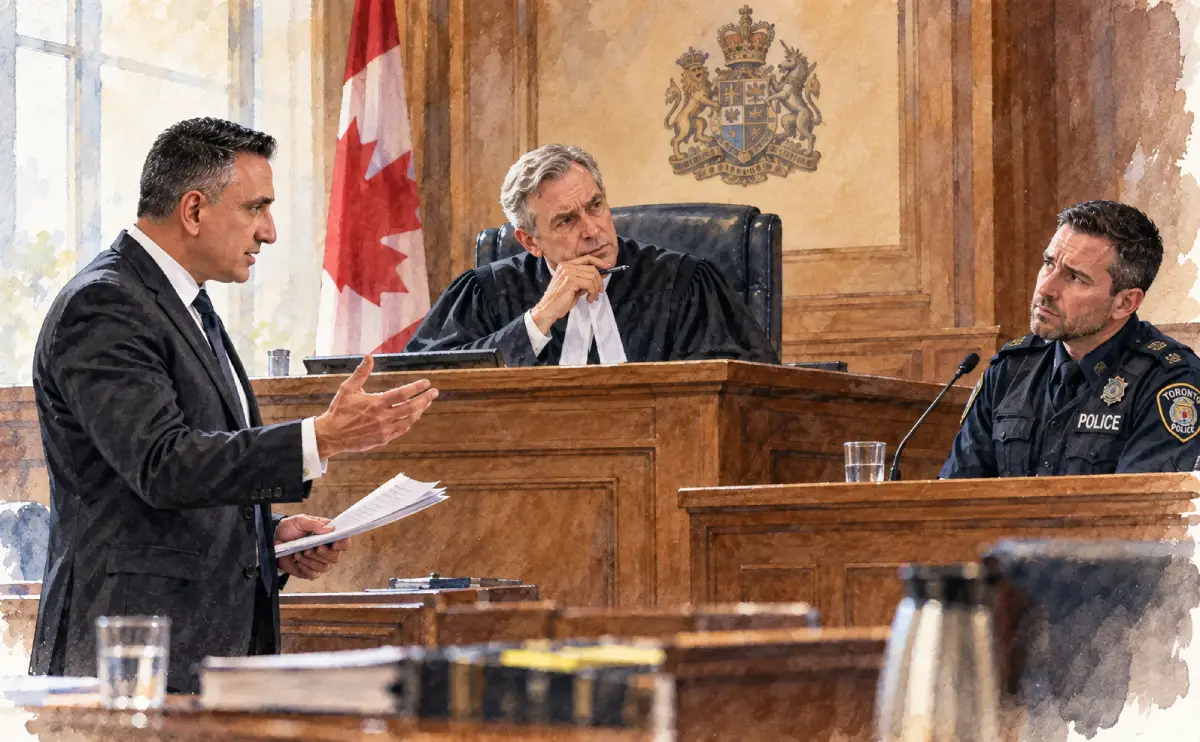
The defence lawyer obtains the police station video and points out several differences between the officer’s testimony and what the video shows:
- Standing normally: The driver appears steady on his feet and shows no obvious signs of losing his balance.
- Speaking clearly: The driver answers questions and speaks without any noticeable difficulty.
- Acting normally: The driver appears alert and follows the officer’s instructions without difficulty.
How Does This Create Reasonable Doubt?
The judge now has two different accounts. The police officer says the driver was clearly impaired, but the video does not appear to support that claim.
- The judge might begin to question the officer’s observations and whether the Crown has proven that the driver’s ability to operate a vehicle was impaired by alcohol.
- If the video and other evidence leave the judge with a reasonable doubt about impairment, the accused must be found not guilty of impaired driving.
This example shows how a criminal defence lawyer can use video evidence to challenge police testimony and raise reasonable doubt at trial.

What Does the Supreme Court Say About Reasonable Doubt?
The Supreme Court of Canada explained the meaning of reasonable doubt in R. v. Lifchus (1997). This important decision helps judges and juries understand how sure they must be before finding someone guilty of a crime.
What Did the Supreme Court Decide in R. v. Lifchus?
In the case R vs Lifchus the Supreme court explained three important rules:
- Reasonable doubt must make sense: It must be based on reason, common sense, and the evidence or lack of evidence.
- Probably guilty is not enough: The Crown must prove more than that the accused likely committed the crime.
- Absolute certainty is not required: The Crown does not have to prove guilt beyond every possible doubt.
Why Is R. v. Lifchus Important?
This decision helps ensure that people are not found guilty based on suspicion or weak evidence.
If a judge or jury has a reasonable doubt about guilt, the accused must be found not guilty.
Can a Judge Have Reasonable Doubt Even if They Don’t Believe the Accused?
Yes. A judge can have reasonable doubt even if they do not believe everything the accused says in court.
The Supreme Court of Canada explained this important rule in R. v. W.(D.), [1991] 1 SCR 742.
What Did the Supreme Court Decide in R. v. W.(D.)?
The Court explained three rules judges and juries must follow when an accused person testifies:
- If they believe the accused: They must find the accused not guilty.
- If they don’t believe the accused but the testimony raises reasonable doubt: They must still find the accused not guilty.
- If the testimony does not raise reasonable doubt: They must consider all the evidence and decide whether the Crown has proven guilt beyond a reasonable doubt.
Why Is This Important in a Criminal Trial?
A judge does not have to believe every word the accused says to find them not guilty.
For example, a judge might question parts of the accused’s story but also find problems with the police evidence.
The key point: Not believing the accused does not automatically mean the Crown has proven its case.
The Crown must still prove guilt beyond a reasonable doubt. If a reasonable doubt remains, the accused must be found not guilty.
How Can a Criminal Defence Lawyer Raise Reasonable Doubt?
A criminal defence lawyer looks for weaknesses in the Crown’s case that could raise reasonable doubt about your guilt.
Even when the police believe they have a strong case, the evidence does not always tell the full story.
How Can a Defence Lawyer Challenge the Evidence?
An experienced criminal defence lawyer can raise reasonable doubt by:
- Questioning witnesses: Finding mistakes, conflicting statements, or problems with their credibility.
- Challenging police evidence: Reviewing police reports, bodycam footage, and other evidence for errors or inconsistencies.
- Finding gaps in the Crown’s case: Showing where the evidence fails to prove an important part of the charge.
Why Does Reasonable Doubt Matter to Your Defence?
The Crown must prove every part of the criminal charge beyond a reasonable doubt.
Your defence lawyer does not have to prove you are innocent. The goal is to challenge the Crown’s case and show why the evidence does not prove guilt beyond a reasonable doubt.
Speak With Nicholas Charitsis Today
You’ll speak directly with DUI Lawyer Nicholas Charitsis—not a call centre or an intake representative.

When you call Charitsis Law, you’ll speak directly with a trusted Toronto Criminal Lawyer Nicholas Charitsis.
Nick can answer your questions, explain your legal options, and help you understand the evidence against you.
Call 416-731-7113 today to arrange your confidential case review.