What Does Blood Alcohol Concentration Mean?
When testing drivers for alcohol in Canada, police often use a roadside screening device or an approved breath-testing instrument. You provide a breath sample, and the device measures the concentration of alcohol in your body. This measurement is commonly called your blood alcohol concentration, or BAC.
If you have been charged with an impaired driving or DUI offence, call Nicholas Charitsis at 416-731-7113.
Nicholas is a former Crown Attorney with more than 20 years of criminal law experience. He can review your breathalyzer results, police evidence and disclosure and explain the defence strategies that could apply to your case.
What Does a BAC of 0.08 Mean?
In Canada, blood alcohol concentration is commonly expressed as milligrams of alcohol in 100 millilitres of blood.
A BAC of 0.08 then means the drivers blood system had 80 milligrams of alcohol in 100 millilitres of blood, often written as 80 mg/100 mL.
The number is important because Canadian impaired driving law uses 80 mg as an important legal threshold. It is commonly referred to as “Over 80.”
BAC and Impairment Are Not the Same Thing
A blood alcohol concentration measures the amount of alcohol in your blood. It does not measure how well or poorly you were actually driving.
- You can be charged with impaired driving even when your BAC is below 80 mg. Police can rely on other evidence of impairment, such as your driving, speech, balance, coordination and behaviour.
- An Over 80 charge is different. It focuses on the concentration of alcohol in your blood rather than simply how impaired you appeared to be.
This means a driver can be charged with impaired driving, Over 80, or both offences arising from the same set of circumstances.
E.g. The officer observed a driver whose ability he appeared to be impaired and then arrested the driver for impaired driving. They take the driver to a police station where they provided samples of their breath, which were over 80 milligrams. Subsequently the driver is charged with impaired driving and driving over 80 milligrams.
How Do Police Measure Blood Alcohol Concentration?
Police can measure blood alcohol concentration using breath or blood samples. In most impaired driving investigations, police begin with breath testing.
There are two different stages of breath testing, and they serve different purposes.
- Roadside breath testing uses an approved screening device to screen a driver’s alcohol level. The device typically gives a Pass, Warn or Fail result rather than the precise BAC reading used in an Over 80 prosecution.
- Breath testing after an arrest uses an approved instrument to obtain numerical BAC readings. These results can become evidence in an impaired driving or Over 80 case.
In some circumstances, police can also obtain a blood sample to determine a person’s blood alcohol concentration.
The type of test used, when it was administered and how the sample was obtained can all become important when the BAC evidence is reviewed by an impaired driving lawyer.
★★★★★ “For someone who has never been convicted of a criminal offence, Nicholas made the process very easy and comfortable from day one. Extremely thankful! I attended court for two charges – Over 80 and Impaired driving. I blew 175 and 157, hitting a light pole while driving. Nicholas’s team was exceptional, they got my over 80 dropped before trial and my impaired acquitted the day of the trial.”
What Does the Roadside Breath Test Measure?
Police use an approved screening device at the roadside to check a driver’s alcohol level. You provide a breath sample, and the device analyzes the alcohol in your breath to screen for the concentration of alcohol in your blood.
The roadside device is mainly a screening tool. It generally does not provide the precise BAC reading that police later rely on as evidence for an Over 80 charge.
Instead, the device typically displays one of three results:
- Pass – The alcohol concentration detected is below the device’s warn range.
- Warn or Alert – In Ontario, this indicates a blood alcohol concentration of at least 50 mg of alcohol in 100 mL of blood. The warn range is generally 50 to 79 mg.
- Fail – The screening result has reached the fail range. A Fail can lead to an arrest and a demand for further breath samples on an approved instrument.
A Roadside Fail Is Not Your Final BAC Reading
A Fail on a roadside screening device is not normally the precise BAC reading used to prove an Over 80 charge.
Instead, the roadside result can provide police with grounds to continue the impaired driving investigation. After an arrest, police can demand further breath samples on an approved instrument.
The approved instrument produces numerical BAC readings that can become evidence in an impaired driving or Over 80 case.
This distinction is important. The roadside device is used to screen for alcohol, while the approved instrument used after arrest is designed to produce the BAC evidence used in the criminal case.
Why is a Second Breathalyzer Test Done?
After an arrest for impaired driving, police can demand breath samples for testing on an approved instrument. This is different from the roadside screening device.
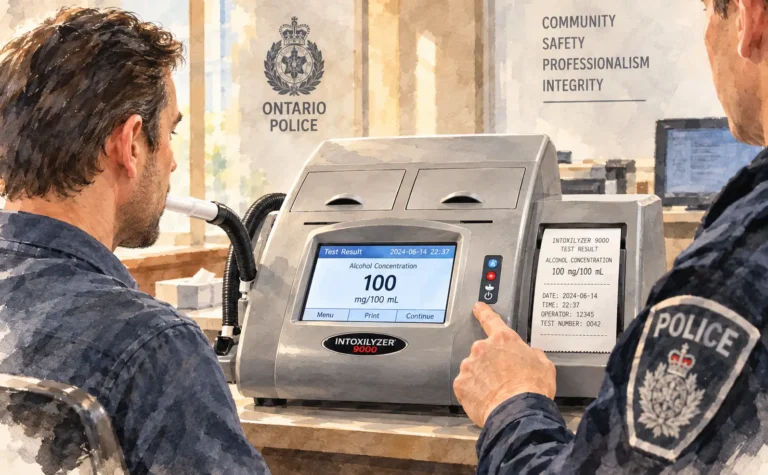
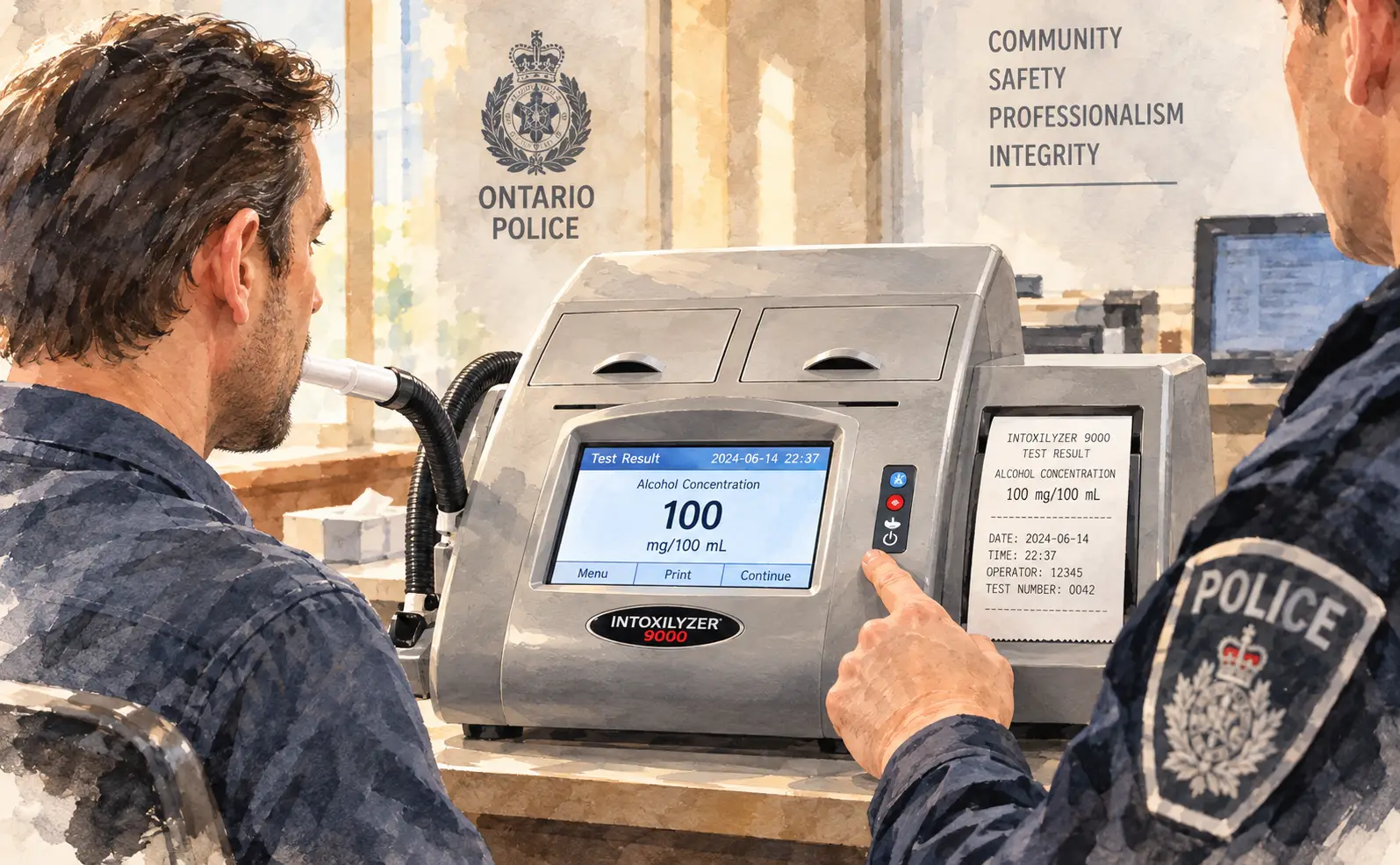
The approved instrument measures the alcohol in your breath and produces numerical readings used to determine your blood alcohol concentration. These BAC results can become important evidence in an Over 80 charge.
For example, an approved instrument reading of 100 mg means the test detected an alcohol concentration equivalent to 100 milligrams of alcohol in 100 millilitres of blood.
Police Normally Take Two Breath Samples
Police normally obtain two breath samples for approved instrument testing. The samples are taken separately, and the instrument records the results of each test.
The testing process creates records that can later form part of the disclosure provided by the Crown Attorney. These records can include the BAC readings and information about how and when the testing was conducted.
Breathalyzer Results Can Be Reviewed and Challenged
A BAC reading is important evidence, but the number should not be viewed in isolation.
Our impaired driving lawyers can review the breath-testing records, timing of the samples, police demands, testing procedures and other evidence surrounding the breath tests. Problems with the investigation or breath testing can affect the admissibility of the evidence can become part of the defence strategy.
The Crown Attorney still has to prove the Over 80 charge beyond a reasonable doubt. A high BAC reading does not mean there is nothing to fight.
Driving Over 80 Charge & Blood Alcohol Concentrations
In a drive over 80 mgs charge your blood alcohol concentration becomes the evidence against you. The offence focuses only on the amount of alcohol in your blood rather than simply how impaired you appeared to police.
Under the Criminal Code, it is an offence to have a blood alcohol concentration of 80 mg or more of alcohol in 100 mL of blood within two hours after operating a vehicle.
This is why the BAC readings obtained through approved instrument testing can become important evidence in a Drive Over 80 case.
You Can Be Charged With Impaired Driving and Over 80
Impaired driving and Over 80 are separate criminal offences. A driver can be charged with one or both after the same incident.
- An impaired driving charge focuses on whether alcohol or drugs impaired your ability to operate a vehicle. Police can rely on evidence such as your driving, speech, balance, coordination and behaviour.
- An Over 80 charge focuses on blood alcohol concentration. The Crown Attorney must prove the elements of that offence using the evidence obtained during the investigation.
This means a person can face an impaired driving charge even when there is no BAC reading of 80 mg or more.
BAC Evidence Does Not End the Case
An Over 80 BAC reading is important evidence, but it does not mean the case cannot be fought.
Our team of DUI defence lawyers can review how the breath demand was made, when the samples were taken, the approved instrument records, police procedures and Charter issues. Problems with the evidence or the way it was obtained can become part of the defence strategy.
Speak With Nicholas Charitsis Today
You’ll speak directly with Nicholas Charitsis—not a call centre or an intake representative.

When you call Charitsis Law, you’ll speak directly with a trusted DUI lawyer in Toronto. Nicholas Charitsis can answer your questions, explain your legal options, and help you understand the evidence against you.
Call 416-731-7113 today to arrange your confidential case review.
Frequently Asked Questions About Blood Alcohol Concentrations
Q. What does BAC stand for?
A. BAC stands for blood alcohol concentration.
It measures the amount of alcohol in a person’s blood. In Canadian impaired driving law, BAC is commonly expressed as milligrams of alcohol in 100 millilitres of blood.
For example, a BAC of 80 mg means there are 80 milligrams of alcohol in 100 millilitres of blood. You will also commonly see this expressed as 0.08 BAC.
Q. What does a BAC of 0.08 mean in Canada?
A. A BAC of 0.08 is commonly expressed in Canadian impaired driving law as 80 milligrams of alcohol in 100 millilitres of blood, or 80 mg/100 mL.
This is an important legal threshold because the Criminal Code makes it an offence to have a blood alcohol concentration of 80 mg or more within two hours after operating a vehicle.
BAC and impairment are not the same thing. A driver can still be charged with impaired driving when their BAC is below 0.08 if the Crown Attorney has other evidence that alcohol impaired their ability to operate the vehicle.
Q. How do police measure your blood alcohol concentration?
A. Police commonly use breath testing to determine a driver’s alcohol concentration.
At the roadside, an approved screening device is used to screen for alcohol and typically produces a Pass, Warn or Fail result. A roadside screening test generally does not provide the precise BAC reading used as evidence in an Over 80 prosecution.
After an arrest, police can obtain further breath samples using an approved instrument. This equipment produces numerical BAC readings that can become evidence in an impaired driving or Over 80 case. In some circumstances, blood samples can also be used to determine blood alcohol concentration.
Q. What is the difference between a roadside breath test and a breathalyzer test after arrest?
A. A roadside breath test is primarily a screening test.
In Ontario, an approved screening device can produce a Pass, Warn or Fail result. A Warn generally relates to the range from 50 to 79 mg of alcohol in 100 mL of blood. A Fail can lead to an arrest and further breath testing.
After an arrest, police normally use an approved instrument to obtain numerical alcohol readings. These readings are much more important to an Over 80 prosecution because they provide the BAC evidence the Crown Attorney can rely upon in court.
Q. Can you be charged with impaired driving if your BAC is under 0.08?
A. Yes. You do not need a BAC of 0.08 or higher to be charged with impaired driving. Impaired driving and Over 80 are separate criminal offences.
An impaired driving charge focuses on whether alcohol or drugs impaired your ability to operate a vehicle. Police can rely on evidence such as your driving, speech, coordination, balance, behaviour and other observations. An Over 80 charge focuses on the concentration of alcohol in your blood. A driver can therefore face an impaired driving charge even without a BAC of 80 mg or more.
Q. What happens if you refuse to provide a breath sample?
A. Refusing or failing to provide a breath sample after a lawful police demand can result in a separate criminal charge.
The fact that police were unable to obtain a BAC reading does not prevent them from laying a refusal charge or, depending on the other evidence, an impaired driving charge.
The legality of the breath demand can be important. A defence lawyer can review why the demand was made, what instructions police gave, whether the driver was given a reasonable opportunity to comply and the circumstances surrounding the alleged refusal.
Q. Can a BAC or breathalyzer reading be challenged?
A. Yes. A BAC reading is important evidence, but it does not automatically determine the outcome of an impaired driving case.
The breath-testing evidence and the police investigation can be reviewed and challenged where there are legal or evidentiary issues.
A defence lawyer can examine the grounds for the breath demand, timing of the samples, approved instrument records, testing procedures, police notes and video, and any Charter issues. Problems with how evidence was obtained or whether it can be admitted at trial can become an important part of the defence strategy.