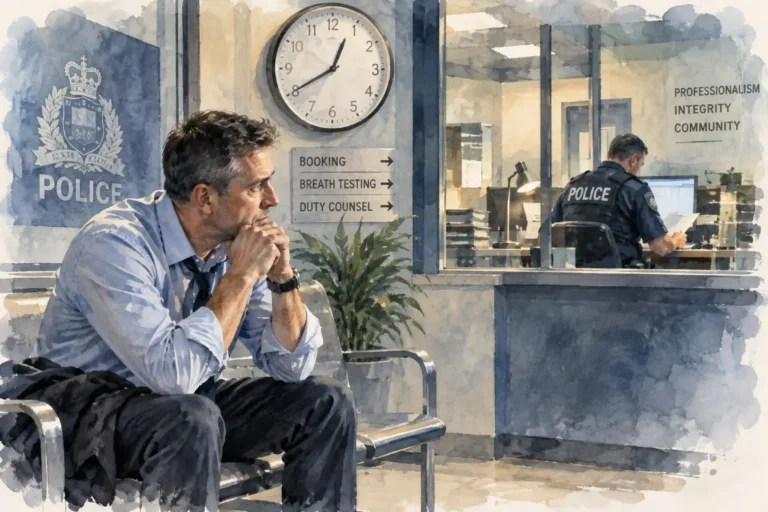
Breathalyzer Test Delays Led to an Acquittal
Can an unexplained police delay help you fight an impaired driving charge? In R. v. Dean, 2013 ONSC 2916, the driver was convicted of driving over 80 mg after providing breath samples at a police station.
However, an unexplained 18-minute delay raised serious questions about whether police followed the breath-testing requirements in force at the time.
The Ontario Superior Court found that the Crown had failed to prove the breath samples were taken as soon as practicable. As a result, the Crown could not rely on an important legal presumption concerning the breath test results. The conviction was overturned, and the court entered an acquittal.
Charged with driving over 80? Find out whether problems with the police investigation or breath testing could help your defence. Arrange your Free DUI Case Review with former Crown Attorney Nicholas Charitsis, or call 416-731-7113 today.
What Happened in R. v. Dean?
Daniel Dean was stopped by police after an officer saw his vehicle weaving within its lane. A roadside breath test registered a fail, and Dean was arrested for driving over 80.
At the police station, however, there was a problem with how the investigation proceeded.
An Unexplained 18-Minute Police Delay
The evidence showed that:
- 12:23 a.m.: Dean arrived at the police station.
- About 12:25 a.m.: The officer had completed the short booking and search procedures.
- 12:43 a.m.: The officer finally called duty counsel.
- 12:54 a.m.: Dean began speaking with duty counsel.
- 1:19 a.m.: The first breath sample was taken.
The officer admitted he could have contacted duty counsel sooner. He could not explain what happened during the remaining 18 minutes.
Why Did the Delay Matter?
Under the Criminal Code rules in force at the time, the Crown had to establish that breath samples were taken as soon as practicable to rely on an important legal presumption.
The appeal judge found that the unexplained delay meant the Crown had not met that requirement.
What Does “As Soon as Practicable” Mean?
Under Canada’s impaired driving laws, “as soon as practicable” means police must act within a reasonably prompt time, considering the circumstances. It doesn’t mean immediately, but unnecessary delays can raise legal issues.
Section 320.28 of the Criminal Code still requires evidentiary breath demands and breath samples to be made or obtained as soon as practicable.
In R. v. Dean, an unexplained 18-minute police delay prevented the Crown from relying on an important legal presumption under the former law. Although the evidentiary rules changed in 2018, police delays can still provide grounds to challenge breath-testing procedures and the lawfulness of a demand.
The result: Dean’s Over 80 conviction was overturned, and the Ontario Superior Court entered an acquittal.
Relevant Case Law:
R. v. Dean — Ontario Superior Court of Justice (2013 ONSC 2916)
View the full decision on CanLII (CanLII)
How Did the Defence Challenge the Breath Test Delay?
The defence argued that police failed to take Daniel Dean’s breath samples as soon as practicable, as required by the Criminal Code provisions in force at the time.
The problem was an unexplained 18-minute delay at the police station. The arresting officer admitted he could have contacted duty counsel sooner but did not explain why he waited.
What Did the Defence Argue?
- The delay was unexplained. The officer completed the booking procedures in only a few minutes but waited until 12:43 a.m. to contact duty counsel.
- Police could have acted sooner. The officer admitted during cross-examination that he could have called duty counsel earlier.
- The Crown had to justify the delay. Under the former law, the prosecution had to establish that breath samples were taken within a reasonably prompt time to rely on the statutory presumption.
Why Was This Important?
The breathalyzer produced readings of 122 mg and 121 mg of alcohol per 100 mL of blood.
However, the defence challenged whether the Crown could use those readings to establish Dean’s blood alcohol level at the time of driving through the former statutory presumption.
The defence argued that the unexplained police delay prevented the Crown from relying on that presumption.
What Did the Court Decide in R. v. Dean?
The Ontario Superior Court agreed with the defence that the unexplained 18-minute delay was important. The Crown had failed to establish that police acted reasonably and promptly under the breath-testing laws in force at the time.
Why Did the Judge Overturn the Conviction?
Justice Victor Mitrow identified three important issues:
- The delay was not explained. Police completed the booking procedures within a few minutes, but the officer waited approximately 18 more minutes before contacting duty counsel.
- The Crown had the burden of proof. It was the prosecution’s responsibility to establish that the breath samples were taken as soon as practicable.
- The legal requirements were not met. Without sufficient evidence explaining the delay, the Crown could not rely on the former statutory presumption connecting the breath readings to Dean’s blood alcohol level when he was driving.
What Was the Final Outcome?
The appeal was allowed, the Over 80 conviction was overturned, and an acquittal was entered.
The decision demonstrates how examining police timelines and questioning officers about unexplained delays can reveal important weaknesses in the Crown’s evidence.
Can Police Delays Still Help Fight an Impaired Driving Charge Today?
Yes. Police delays can still raise important legal issues in impaired driving cases. However, Canada’s breath-testing laws changed in December 2018, so the rules applied in R. v. Dean are different from those used today.
Under the current Criminal Code, an unexplained delay does not automatically make breathalyzer results inadmissible or lead to an acquittal.
When Can Police Delays Become a Defence?
Depending on the circumstances, a DUI lawyer can investigate:
- Delays in obtaining breath samples: Whether police followed the legal requirements for demanding and collecting breath samples.
- Delays in contacting a lawyer: Whether police gave you a reasonable opportunity to speak with counsel without unnecessary delay.
- Delays between breath tests: Whether the timing and testing procedures complied with the applicable legal requirements.
- Unexplained gaps in the investigation: Whether police notes, videos, and other records account for what happened.
- Charter violations: Whether police delays breached your constitutional rights and provide grounds to challenge the evidence.
Why Does R. v. Dean Still Matter?
Although the law has changed, R. v. Dean illustrates the importance of carefully examining the police timeline and questioning officers about unexplained delays.
A delay alone does not guarantee a successful defence. However, when combined with other problems in the investigation, it could provide grounds to challenge the Crown’s evidence.
Speak With Nicholas Charitsis Today
You’ll speak directly with DUI Lawyer Nicholas Charitsis—not a call centre or an intake representative.
When you call Charitsis Law, you’ll speak directly with a trusted DUI lawyer in Toronto. Nicholas Charitsis can answer your questions, explain your legal options, and help you understand the evidence against you.
Call 416-731-7113 today to arrange your confidential case review.
Frequently Asked Questions About Breathalyzer Test Delays
Q. Can a police delay help me beat an impaired driving charge?
A. Yes. Unexplained police delays can raise legal issues that help you fight an impaired driving charge. A DUI lawyer can examine the timeline, police notes, and breath testing records to determine whether officers followed the law.
In some cases, delays can support a Charter argument or challenge the Crown’s evidence.
Q. How long can police wait before giving you a breathalyzer test?
A. There is no single time limit that applies to every breath test. The Criminal Code sets different requirements depending on the type of test and the circumstances. Police must follow the legal rules governing breath demands and testing.
An experienced DUI lawyer can examine whether an unnecessary delay affected the lawfulness or reliability of the evidence.
Q. Can an unexplained 18-minute delay result in a DUI acquittal?
A. Yes, depending on the circumstances and the law that applies. In R. v. Dean, an unexplained 18-minute delay prevented the Crown from relying on an important statutory presumption under the former Criminal Code.
The appeal court overturned the Over 80 conviction and entered an acquittal. However, the law changed in 2018, and the same result cannot be assumed today.
Q. Can a delay in speaking with a lawyer affect my DUI case?
A. Yes. Section 10(b) of the Canadian Charter of Rights and Freedoms guarantees the right to retain and instruct counsel without delay upon arrest or detention. Police must provide a reasonable opportunity to exercise that right, subject to lawful limits.
An unjustified delay can support a Charter challenge and, in appropriate circumstances, lead to evidence being excluded.
Q. What evidence can help prove there was an unnecessary breath test delay?
Your DUI lawyer can examine several sources of evidence, including:
- Police notes and arrest reports.
- Roadside breath testing records.
- Breathalyzer printouts and testing times.
- Police station booking records.
- Body camera and police station videos.
- Records showing when you requested and spoke with a lawyer.
Comparing these records can reveal unexplained gaps or inconsistencies in the police timeline. These details could become important when challenging the Crown’s evidence.