Care or Control and Real Risk
Police Evidence and Impairment in Canadian DUI Cases
As DUI lawyers in Ontario, we rely on R. v. Wren when challenging cases where the Crown assumes someone had control or control of a vehicle. The Court of Appeal made clear that courts must look at the full situation and decide whether there was a real and realistic risk that the vehicle could be driven, such as in Dangerous Driving.
The Court confirmed that:
- Being inside a vehicle is not automatic proof of control: Courts must look at all the facts.
- The Crown must prove a realistic risk of danger: There must be real potential for the vehicle to move.
- Context matters: Where the person was sitting and what they were doing is important.
- The burden stays with the Crown: The accused does not have to prove they were not a risk.
This protects people from being convicted based only on appearance.
Where you need to speak to an impaired driving lawyer, call 416-731-7113.
Relevant Case Law:
R. v. Wren — Ontario Court of Appeal (2000 ONCA)
[View the full decision on CanLII (Canadian Legal Information Institute)]
What Happened in R. v. Wren?
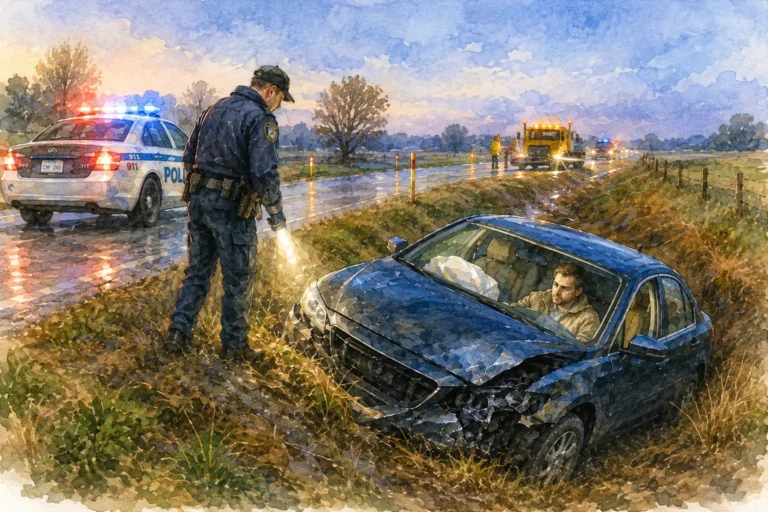
The accused was found by police at about 3:15 a.m., sitting in the driver’s seat of his car after it had gone into a ditch beside a rural road. He was impaired, and later testing showed his blood alcohol concentration was more than twice the legal limit.
The car was badly damaged and stuck in a ditch approximately two to three feet deep. The engine was off, the keys were in the ignition, and the airbag had deployed. The trial judge found that the vehicle could not be moved from the ditch without the assistance of a tow truck.
The accused testified that he had fallen asleep while driving home from a party and ended up in the ditch. He tried unsuccessfully to get the vehicle out with the help of a nearby farmer.
The farmer then offered to call a tow truck. While waiting, the accused eventually returned to the vehicle and sat in the driver’s seat to get out of the cold. He testified that he intended to have the vehicle towed home and did not intend to drive it.
Importantly, the Crown did not base its case on the accused’s earlier driving or his attempts to get the vehicle out of the ditch. The Crown sought a conviction for care and control while impaired based on his being impaired and sitting in the driver’s seat when police arrived.
The Legal Issue Before the Court
Care or Control and the Realistic Risk Test in Impaired Driving Cases
The Court had to decide whether the trial judge properly applied the realistic risk test. The question was whether the evidence showed that the vehicle could actually be put into motion in a dangerous way.
The Court looked at:
- Whether the vehicle was able to run: Mechanical condition matters.
- Whether the accused could operate it: Physical position is important.
- Whether there was intent to drive: Courts examine surrounding facts.
- Whether the trial judge applied the correct legal test: The right standard must be used.
The focus was on real danger, not guesswork.
What the Court Confirmed
The Court confirmed that realistic risk is the key test in care or control cases. Courts must not assume guilt just because someone is in the driver’s seat.
The Court confirmed that:
- Risk must be real, not theoretical: Remote possibilities are not enough.
- Judges must review all the circumstances: No shortcuts are allowed.
- Proof must be strong: Criminal standards are high.
- Reasonable doubt must benefit the accused: If doubt exists, there is no conviction.
This keeps driving prosecutions fair.
Why This Case Matters in Ontario Driving Cases
R. v. Wren is important because police often rely on position alone. This case reminds courts that position is only one factor.
Important points include:
- Sitting in the driver’s seat does not automatically mean control: More evidence is required.
- A parked vehicle may not create risk: The setting matters.
- Mechanical problems may reduce risk: Operability must be proven.
- Intent to drive must be supported by facts: Assumptions are not enough.
- The Crown must prove everything beyond a reasonable doubt: That burden never shifts.
This decision gives strong protection in driving-related prosecutions.
How This Case Helps a Defence
This case allows defence lawyers to challenge weak evidence about control. Courts must look carefully at whether there was real danger.
A defence may focus on:
- Whether the vehicle could actually be driven: Mechanical evidence matters.
- Whether the person planned to drive: Context is important.
- Whether the Crown is relying on assumptions: Speculation is not proof.
- Whether reasonable doubt exists: Doubt must result in acquittal.
Realistic risk must be proven, not guessed.
What This Case Means for You
If you are facing a DUI charge in Ontario, the Crown must prove there was a real risk of danger. Simply being inside a vehicle is not automatically enough to convict you.
Call 416-731-7113 now to speak directly with a criminal defence lawyer and get immediate guidance about your situation.
Impaired Care and Control Lawyers for DUI Defence
If you are facing a DUI or any drinking and driving charge, Charitsis Law represents clients throughout Southern Ontario. Meet with an experienced criminal defence lawyer at our offices in Brampton, Oshawa, Aurora, Newmarket, or Muskoka, or contact us to discuss your case and the court process.Frequently Asked Questions About R. v. Wren
Speak With Nicholas Charitsis Today
You’ll speak directly with Nicholas Charitsis—not a call centre or an intake representative.

When you call Charitsis Law, you’ll speak directly with Nicholas Charitsis. He’ll answer your questions, explain your legal options, and help you understand the evidence against you.
Call 416-731-7113 today to arrange your confidential case review.
FAQ’s about this DUI Case Law
Q. What did R. v. Wren decide
A. The Court of Appeal confirmed that realistic risk of danger is the key test in care or control cases. Being inside a vehicle does not automatically prove guilt. The Crown must show there was real potential for the vehicle to move dangerously. Proof must meet the criminal standard of beyond a reasonable doubt.
Q. What does realistic risk of danger mean?
A. It means there must be a real possibility that the vehicle could be put into motion in a dangerous way. Courts look at whether the vehicle was operable and whether the person could drive it. Hypothetical risks are not enough. The risk must be supported by actual evidence.
Q. Is sitting in the driver’s seat enough for a conviction?
A. No. Sitting in the driver’s seat may raise suspicion, but it does not automatically prove control. Courts must examine the full situation. The Crown must prove real risk, not rely on assumptions. If there is doubt, the accused must be acquitted.
Q. Why is this case important in Ontario criminal law?
A. This case protects people from automatic convictions. It ensures that courts carefully examine the facts before finding someone guilty. Criminal law requires strong proof. The burden always stays with the Crown.
Q. Why should I speak to a criminal defence lawyer right away?
A. Driving-related charges can lead to serious penalties, including a criminal record and licence suspension. Early legal advice allows your lawyer to examine whether the Crown can prove realistic risk. Small details can change the outcome of a case. Immediate guidance helps protect your future.